

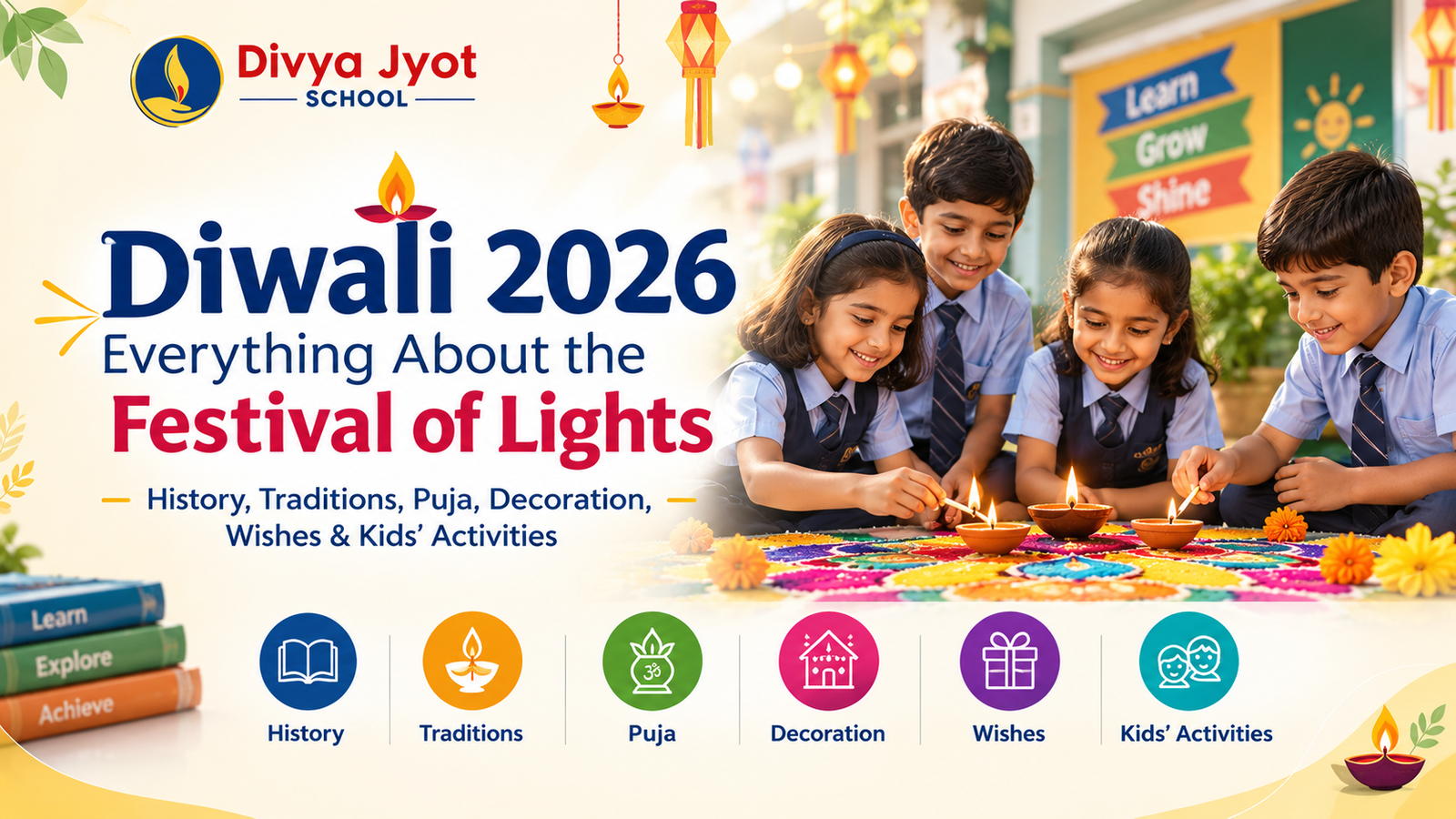
Diwali is one of the most awaited festivals for children at Divya Jyot School, Ahmedabad. It brings together colours, creativity, culture, sweets, and joyful learning—helping students understand that the festival is not only about lighting diyas, but also about lighting values within themselves.
At Divya Jyot, education goes beyond textbooks. Through festivals like Diwali, children learn gratitude, kindness, teamwork, environmental responsibility, and respect for traditions—values that shape confident and compassionate individuals.
Why Diwali Is Special at Divya Jyot School
Diwali is a festival of lights, but at Divya Jyot School, it is also a festival of learning. Students do not just celebrate the festival; they explore its history, traditions, and deeper meaning through fun-filled classroom activities.
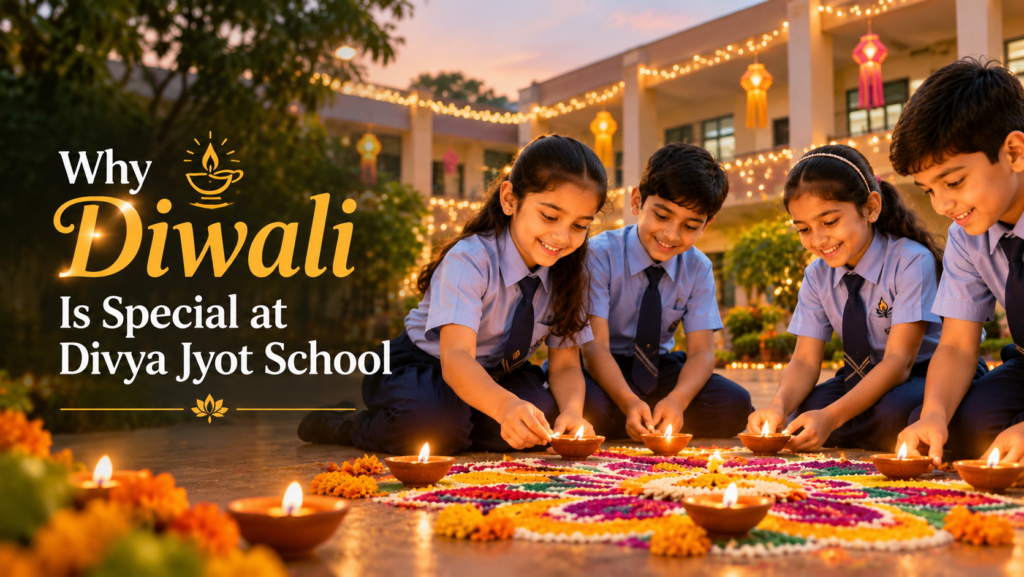
Our school believes in holistic development, where academic excellence goes hand in hand with creativity, values, and life skills. Diwali celebrations give children an opportunity to express themselves artistically, work together, and understand the importance of sharing happiness with others.
Diwali 2026: Date and Significance
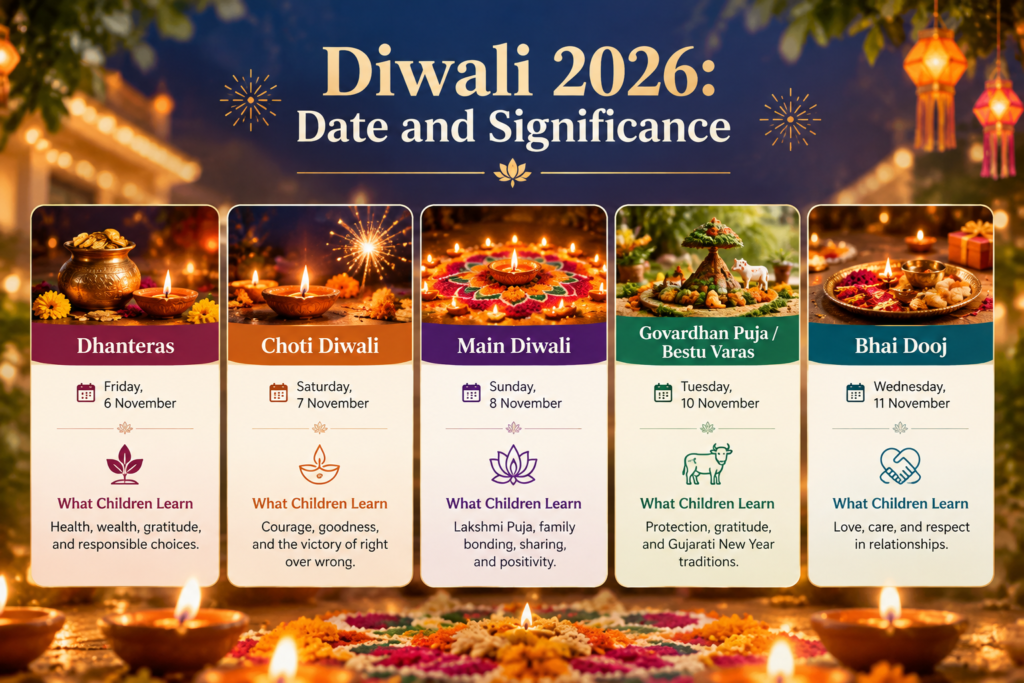
Diwali 2026 will be celebrated on Sunday, 8 November 2026. The main Lakshmi Puja muhurat is from 5:54 PM to 7:50 PM in New Delhi, though families should confirm timings for their own city.
| Festival | Date in 2026 | What Children Learn |
|---|---|---|
| Dhanteras | Friday, 6 November | Health, wealth, gratitude, and responsible choices |
| Choti Diwali | Saturday, 7 November | Courage, goodness, and the victory of right over wrong |
| Main Diwali | Sunday, 8 November | Lakshmi Puja, family bonding, sharing, and positivity |
| Govardhan Puja / Bestu Varas | Tuesday, 10 November | Protection, gratitude, and Gujarati New Year traditions |
| Bhai Dooj | Wednesday, 11 November | Love, care, and respect in relationships |
For students at Divya Jyot, every day of Diwali becomes a lesson in values—whether it is cleaning their surroundings, making a rangoli, sharing sweets, or performing a kind act for someone in need.
The Story Behind Diwali: Lessons for Young Minds
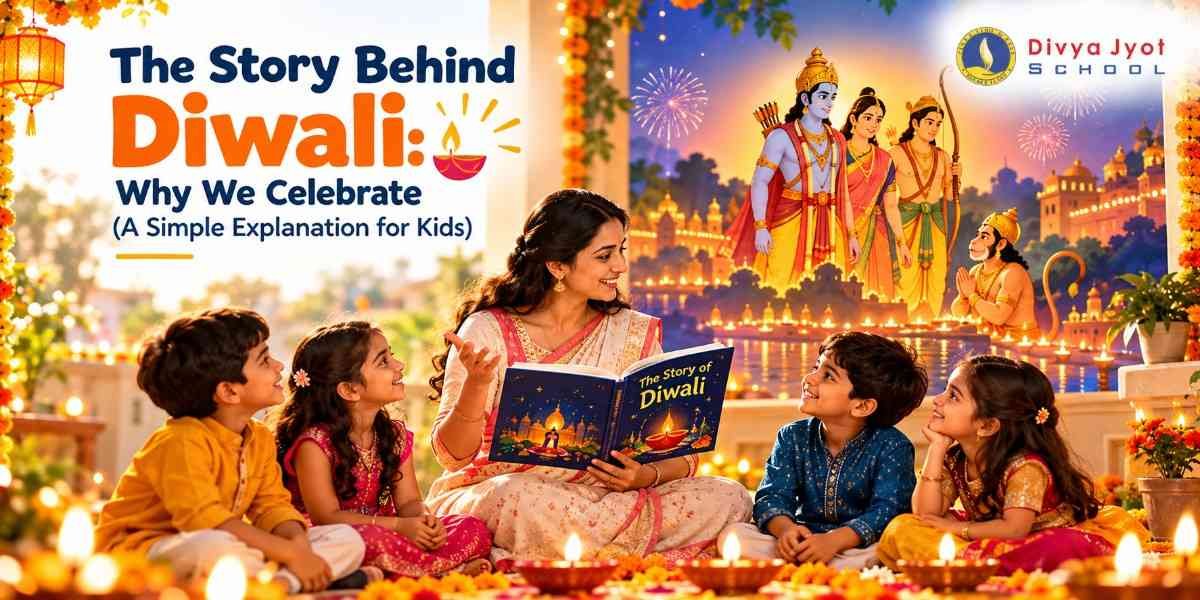
Children love stories, and Diwali is full of meaningful ones. At Divya Jyot School, teachers use storytelling to help students connect with the festival’s values in a simple and engaging way.
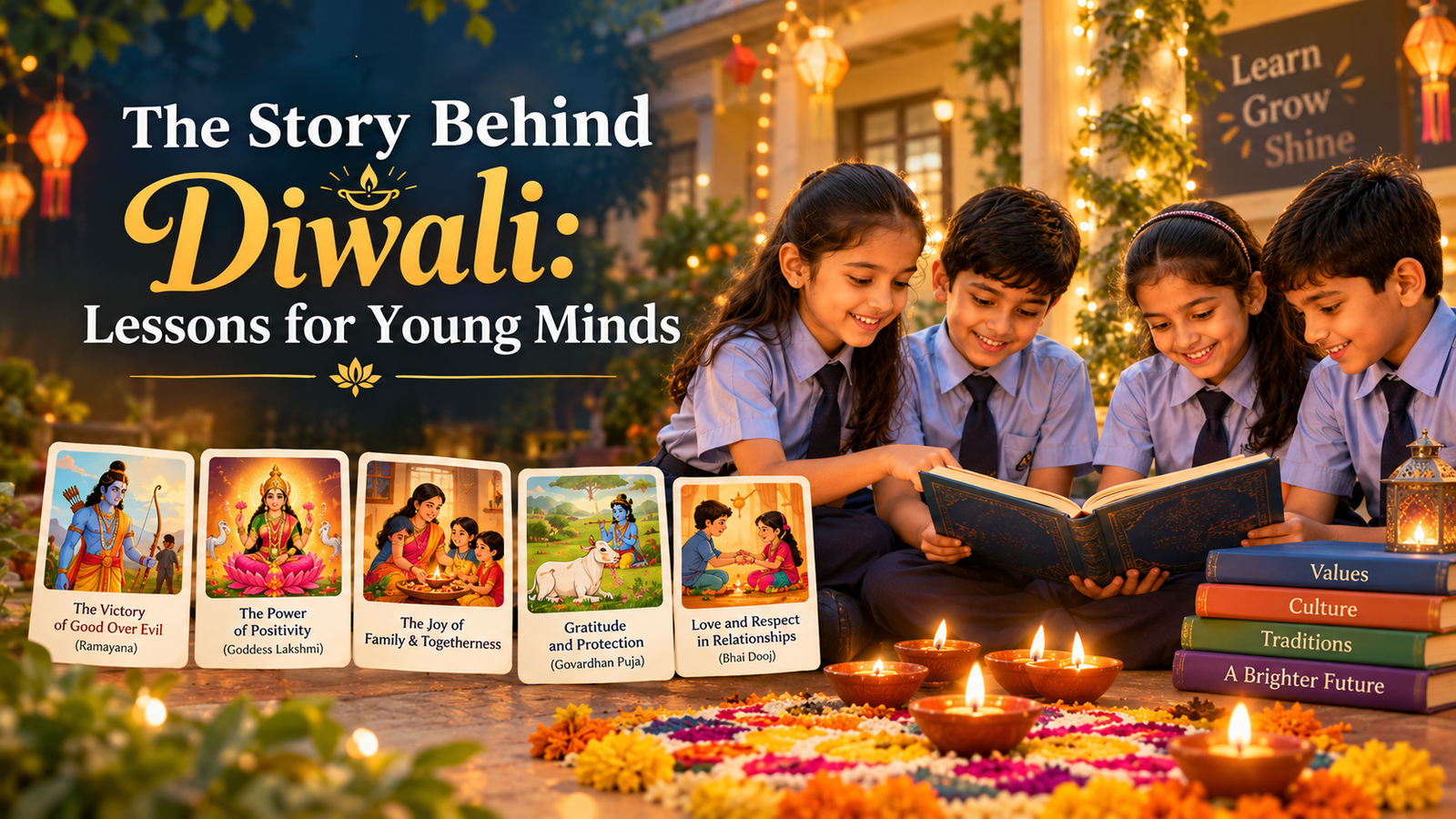
Lord Rama’s Return to Ayodhya
The most popular Diwali story is the return of Lord Rama, Goddess Sita, and Lakshmana to Ayodhya after 14 years of exile. The people of Ayodhya lit diyas to welcome them home, symbolising hope and the victory of good over evil.
Lesson for children:
Goodness, patience, and courage always win in the end.
Goddess Lakshmi and Prosperity
Diwali is dedicated to Goddess Lakshmi, the goddess of wealth and prosperity. Families clean and decorate their homes to welcome her blessings.
Lesson for children:
Hard work, cleanliness, and gratitude attract positivity into our lives.
Lord Krishna and Narakasura
Choti Diwali marks Lord Krishna’s victory over the demon Narakasura.
Lesson for children:
Arrogance and injustice may seem powerful, but truth and righteousness always prevail.
Jain and Sikh Traditions
For Jains, Diwali marks the nirvana of Lord Mahavira. For Sikhs, it is associated with the release of Guru Hargobind Ji.
Lesson for children:
Respect all faiths and celebrate the diversity that makes India beautiful.
How Divya Jyot School Celebrates Diwali
Diwali celebrations at Divya Jyot School are designed to be joyful, safe, and educational. Students participate in a variety of activities that combine fun with learning, helping them connect with Indian culture in a meaningful way.
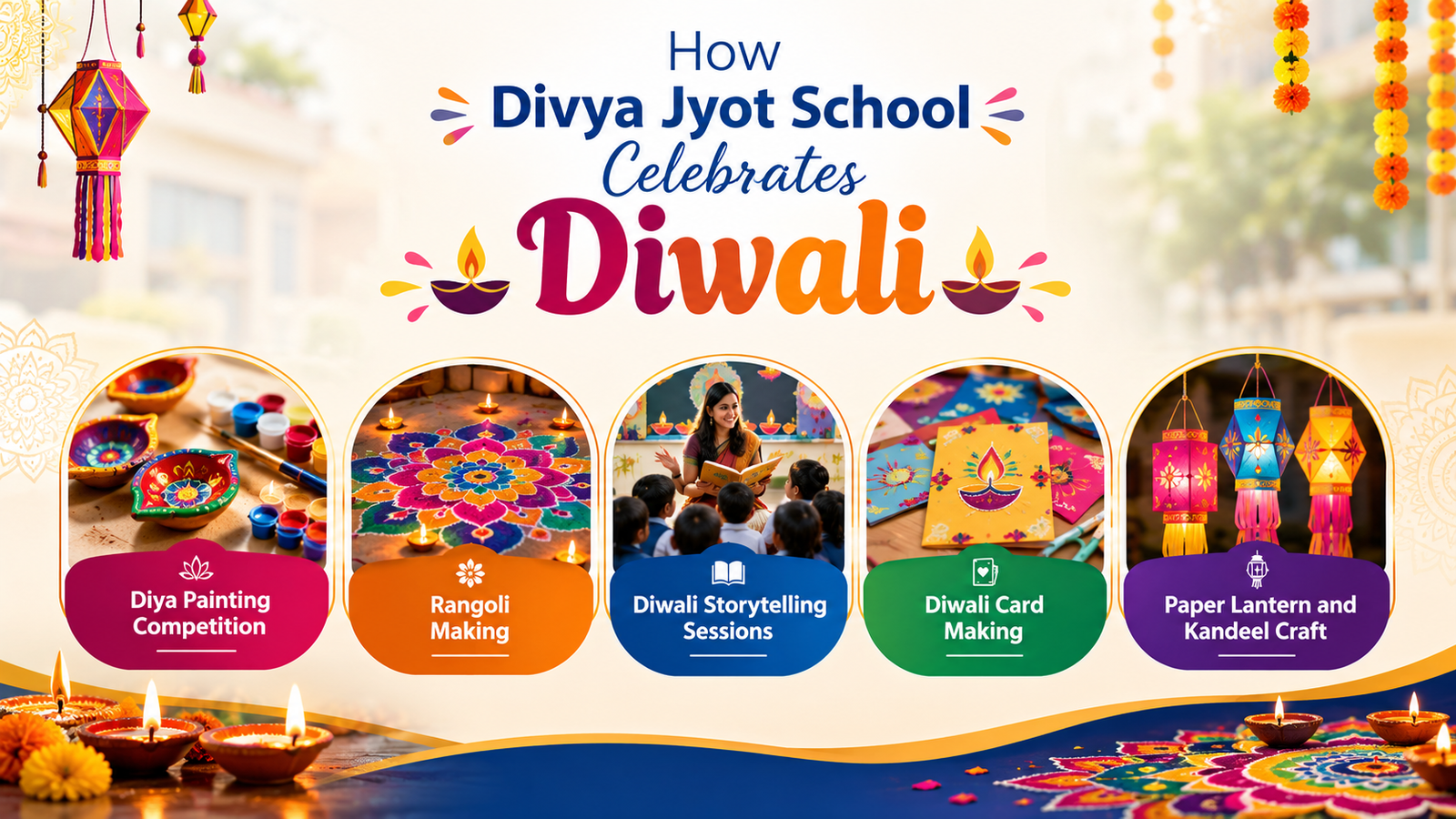
Diya Painting Competition
Children paint clay diyas with vibrant colours, glitter, and creative designs. This activity develops fine motor skills, creativity, and an appreciation for traditional crafts.
Rangoli Making
Students create beautiful rangoli designs using coloured powders, flower petals, rice, and lentils. Rangoli making encourages patience, teamwork, and artistic expression.
Diwali Storytelling Sessions
Teachers narrate age-appropriate stories of Lord Rama, Goddess Lakshmi, Lord Krishna, and Lord Mahavira. Storytelling helps children understand the values behind the festival in a fun and memorable way.
Diwali Card Making
Children create greeting cards for parents, grandparents, teachers, and community helpers. This activity encourages expression, gratitude, and love.
Paper Lantern and Kandeel Craft
Students make colourful paper lanterns and kandeels using chart paper, scissors, and ribbons. This is a safe and creative alternative to fireworks-based celebrations.
Diwali Fancy Dress and Cultural Performances
Children dress up as characters from Diwali stories and participate in cultural performances. This builds confidence, public speaking skills, and cultural awareness.
Eco-Friendly Diwali Pledge
Students take a pledge to celebrate a clean, safe, and green Diwali—avoiding plastic waste, respecting animals, and using lights responsibly.
Diwali Activities Parents Can Do at Home
Learning does not stop at school. Parents can continue the Diwali learning experience at home with simple, fun activities that strengthen family bonding and reinforce values.
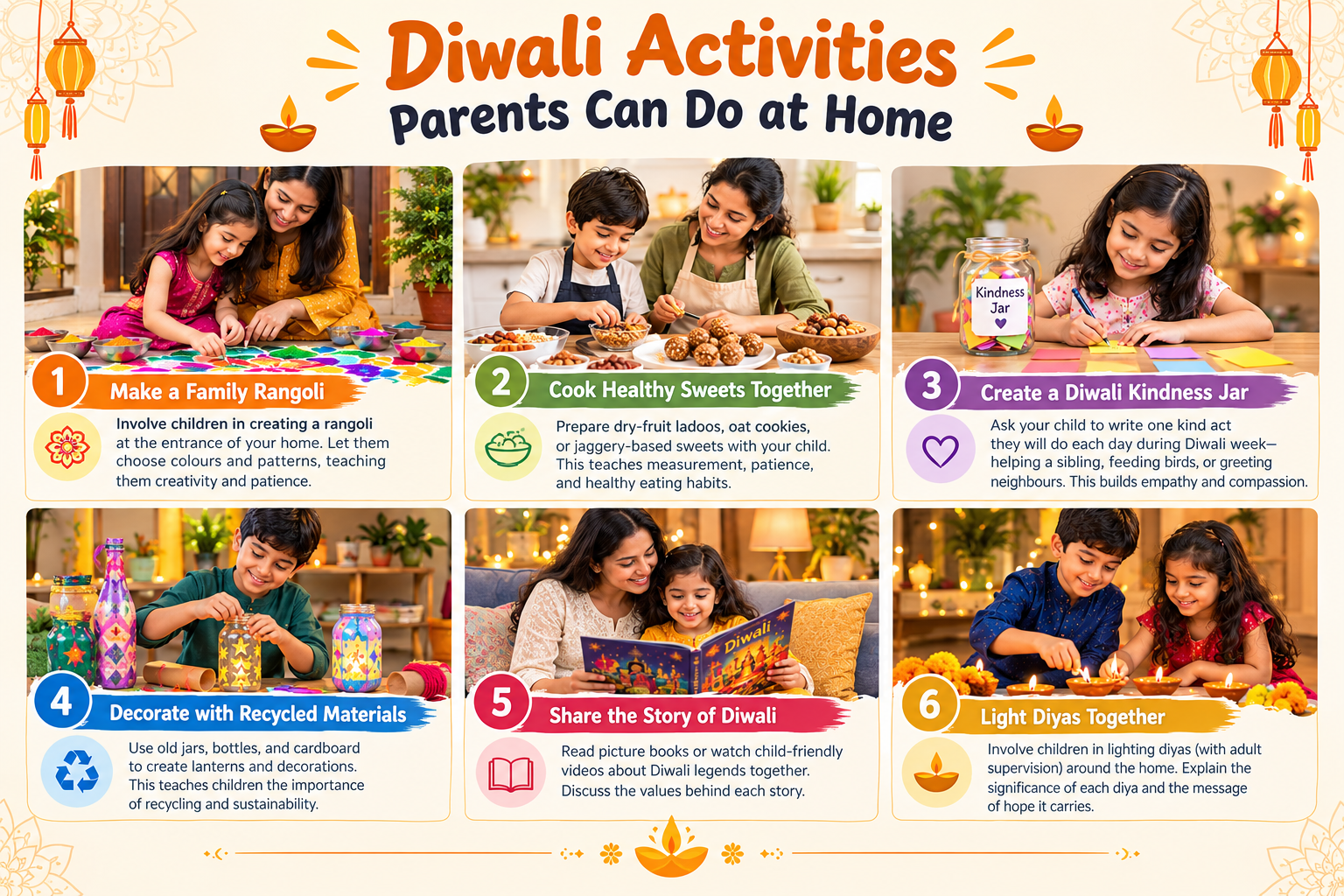
1. Make a Family Rangoli
Involve children in creating a rangoli at the entrance of your home. Let them choose colours and patterns, teaching them creativity and patience.
2. Cook Healthy Sweets Together
Prepare dry-fruit ladoos, oat cookies, or jaggery-based sweets with your child. This teaches measurement, patience, and healthy eating habits.
3. Create a Diwali Kindness Jar
Ask your child to write one kind act they will do each day during Diwali week—helping a sibling, feeding birds, or greeting neighbours. This builds empathy and compassion.
4. Decorate with Recycled Materials
Use old jars, bottles, and cardboard to create lanterns and decorations. This teaches children the importance of recycling and sustainability.
5. Share the Story of Diwali
Read picture books or watch child-friendly videos about Diwali legends together. Discuss the values behind each story.
6. Light Diyas Together
Involve children in lighting diyas (with adult supervision) around the home. Explain the significance of each diya and the message of hope it carries.
Diwali Decoration Ideas for School and Home
Diwali decoration is a favourite activity for children. Here are some ideas that work beautifully for both classrooms and homes.
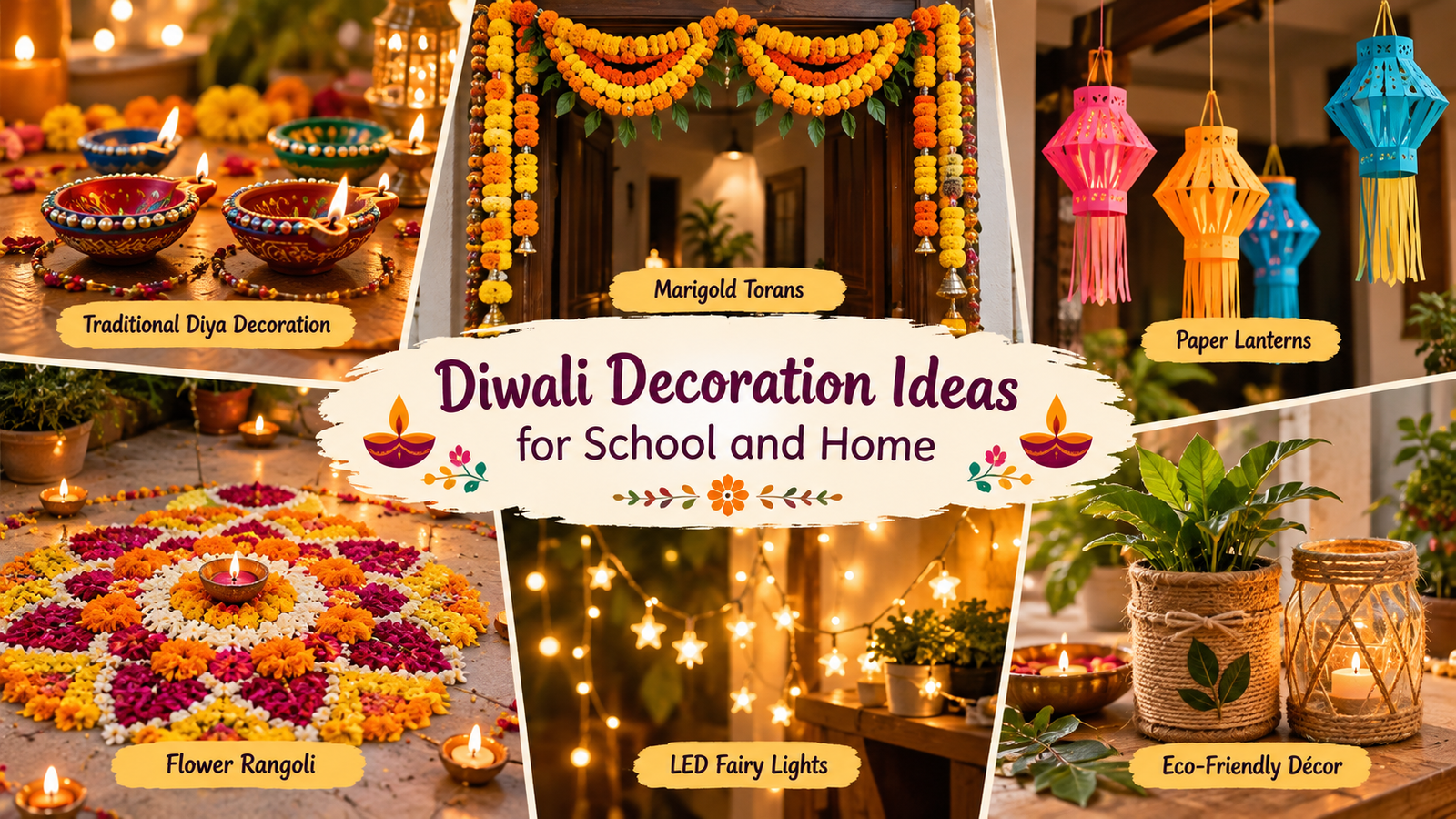
Traditional Diya Decoration
Arrange clay diyas on windowsills, balconies, and entrance pathways for a classic festive look.
Marigold Torans
Hang marigold garlands or handmade paper torans above doorways to welcome positivity.
Paper Lanterns
Colourful paper lanterns and hanging stars create a festive atmosphere and are safe for children to make.
Flower Rangoli
Use marigolds, roses, and chrysanthemums for floral rangoli designs that add fragrance and natural beauty.
LED Fairy Lights
Warm-white fairy lights brighten spaces while saving electricity. Always choose energy-efficient options.
Eco-Friendly Décor
Use natural colours, recycled materials, and reusable decorations to celebrate responsibly.
Diwali Sweets and Healthy Alternatives
No Diwali is complete without sweets. Popular treats include kaju katli, besan laddoo, motichoor laddoo, and soan papdi. At Divya Jyot, we also encourage healthier options like dry-fruit ladoos, dates, and jaggery-based sweets.
Sharing sweets with neighbours, helpers, and those in need reflects the true spirit of Diwali kindness and generosity.
Safety Tips for Diwali
Diwali celebrations should always be joyful and safe, especially for children.
- Keep diyas, candles, and electrical lights away from curtains and children’s reach.
- Do not allow young children to handle fireworks.
- Prefer community light displays or eco-friendly celebrations over loud crackers.
- Keep a bucket of water or sand nearby when lighting diyas.
- Wear cotton clothes around flames.
- Keep pets indoors and create a calm space for them.
- Dispose of waste responsibly and avoid plastic decoration.
- Follow local rules regarding firecrackers strictly.
Why Festivals Matter in Education
At Divya Jyot School, we believe festivals are powerful teaching tools. They help children:
- Connect with their culture and heritage.
- Develop creativity through art and craft.
- Learn values like gratitude, sharing, and respect.
- Build confidence through performances and competitions.
- Understand the importance of community and togetherness.
Our child-centric approach ensures that every festival becomes a meaningful learning experience, not just a day of fun.
Divya Jyot School: Nurturing Bright Futures
Since 2010, Divya Jyot School has been shaping young minds with a balanced focus on academics, values, and life skills. With over 1,200 students and a team of experienced educators, the school is committed to providing quality CBSE education in a safe, nurturing environment.
Our vision is to nurture confident, curious, and compassionate learners through academic excellence, creativity, and values—preparing every child to thrive as a responsible, capable, and future-ready global citizen.
Just as Diwali lights up homes across Ahmedabad, Divya Jyot School strives to light up young minds with knowledge, values, and confidence—helping every child shine in their own unique way.
Conclusion: Let Every Child’s Light Shine
Diwali 2026, celebrated on 8 November, is a beautiful opportunity for children to learn, celebrate, and grow. At Divya Jyot School, Ahmedabad, we make sure that every celebration is filled with joy, creativity, and meaningful lessons.
May this Diwali bring happiness to every home, success to every student, and peace to every heart. Let us celebrate responsibly, decorate creatively, and spread the true light of Diwali—love, knowledge, and kindness.
Frequently Asked Questions (FAQs)
When is Diwali in 2026?
Diwali 2026 will be celebrated on Sunday, 8 November 2026. The main Lakshmi Puja will be performed in the evening.
What is the Lakshmi Puja muhurat for Diwali 2026?
The Lakshmi Puja muhurat on 8 November 2026 is from 5:54 PM to 7:50 PM (New Delhi reference). Timings may vary slightly by city, so families should check their local panchang.
Why do we celebrate Diwali?
Diyas are lit to welcome Goddess Lakshmi and to symbolise the removal of darkness, ignorance, and negativity from our lives. The tradition began when the people of Ayodhya lit lamps to welcome Lord Rama.
How can children celebrate an eco-friendly Diwali?
Children can celebrate an eco-friendly Diwali by:
Using clay diyas instead of plastic lights,
Making rangoli with flower petals and natural colours,
Creating decorations from recycled materials,
Avoiding loud crackers and choosing light displays or music instead,
Taking an eco-Diwali pledge to keep surroundings clean and safe
What activities can kids do during Diwali?
Popular Diwali activities for kids include diya painting, rangoli making, paper lantern crafts, greeting-card making, storytelling sessions, treasure hunts, and sweet-making (with adult supervision). These activities build creativity, cultural awareness, and teamwork.
How does Divya Jyot School celebrate Diwali?
At Divya Jyot School, Ahmedabad, Diwali is celebrated through diya painting, rangoli competitions, storytelling, cultural performances, and eco-friendly craft activities. These celebrations help students connect with Indian traditions while developing confidence, creativity, and values.