
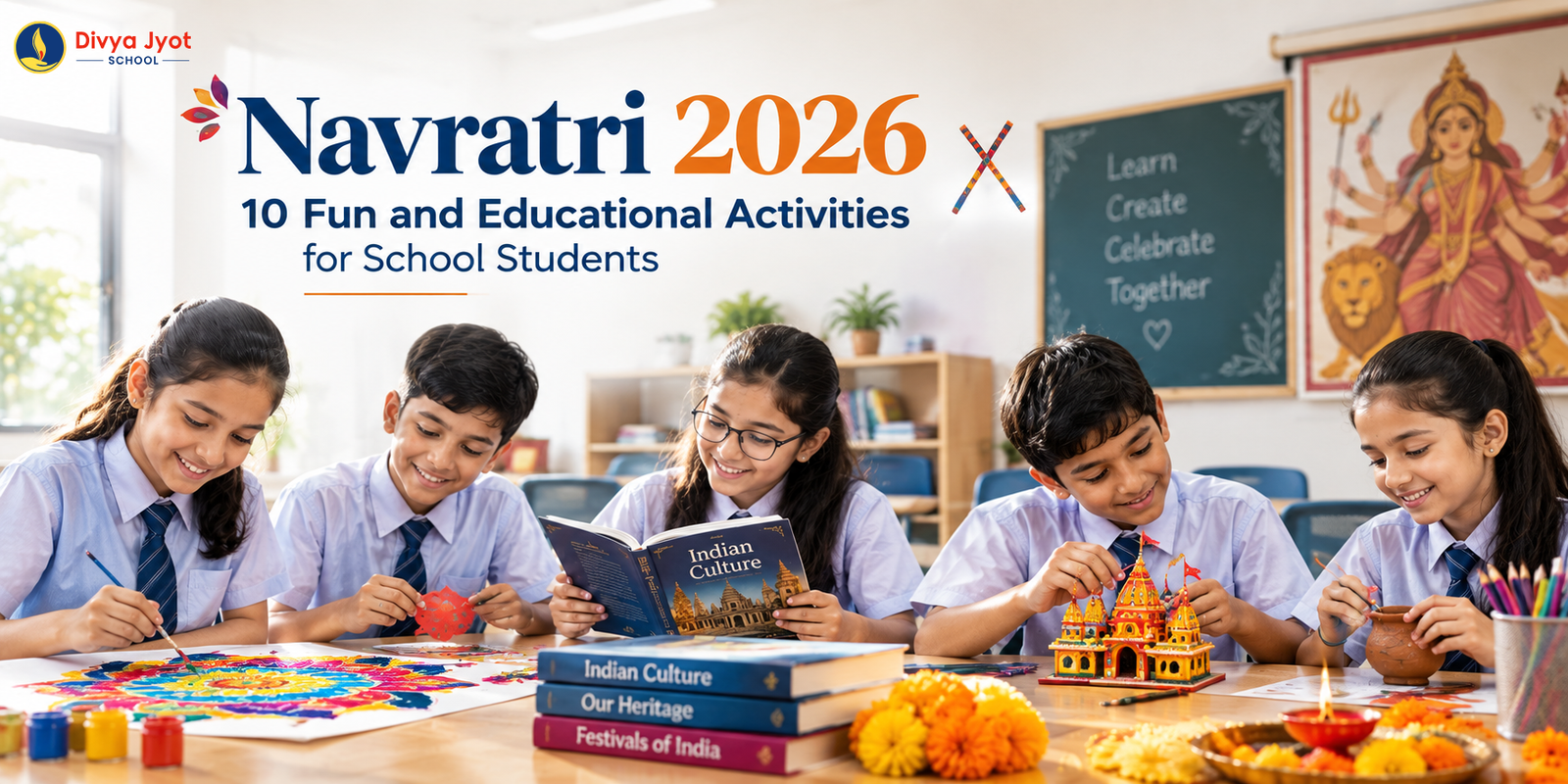
Navratri is one of India’s most vibrant and culturally significant festivals. Celebrated with devotion, music, dance, creativity, and community spirit, the festival provides children with a wonderful opportunity to learn about Indian traditions while enjoying meaningful activities.
As Navratri 2026 approaches, schools can turn the festive season into an engaging learning experience. Instead of limiting the celebration to dance and decorations, students can participate in activities that encourage creativity, teamwork, communication, cultural awareness, and learning.
For a school, festivals can become valuable opportunities for experiential learning. At Divya Jyot School, where academics are combined with creativity, co-curricular activities, values, and holistic development, celebrations such as Navratri can provide students with opportunities to learn beyond textbooks.
Navratri 2026: Day-Wise School Activity Ideas
Schools can make Navratri 2026 more engaging by planning different activities according to each day of the festival. Students can participate in creative, cultural, educational, and traditional activities while also learning about the significance of each Navratri day.
Here is a suggested day-wise activity calendar for schools:
| Date | Navratri Day | Colour | Suggested School Activity |
|---|---|---|---|
| October 11, 2026 | Day 1 – Ghatasthapana, Pratipada | Orange | Navratri Introduction & Cultural Learning |
| October 12, 2026 | Day 2 – Dwitiya | White | Chart and Poster-Making Activity |
| October 13, 2026 | Day 3 – Tritiya | Red | Traditional Dress Day |
| October 14, 2026 | Day 4 – Chaturthi | Royal Blue | Navratri Quiz |
| October 15, 2026 | Day 5 – Panchami | Yellow | Navratri Craft Activity |
| October 16, 2026 | Day 6 – Shashthi | Green | Traditional Garba Learning Session |
| October 17, 2026 | Day 7 – Saptami | Grey | Rangoli and Floor-Art Activity |
| October 18, 2026 | Day 8 – Ashtami (Maha Ashtami) | Purple | Storytelling & Cultural Learning |
| October 19, 2026 | Day 9 – Navami (Maha Navami) | Peacock Green / Pink | Inter-House Cultural Competition |
| October 20, 2026 | Day 10 – Vijayadashami (Dussehra) | Brown | Cultural Celebration & Values-Based Activity |
10 Exciting Navratri Activities for School Students to Celebrate and Learn in 2026
Here are 10 fun and educational Navratri activities for school students that schools can organise in 2026.
1. Navratri Chart and Poster-Making Activity
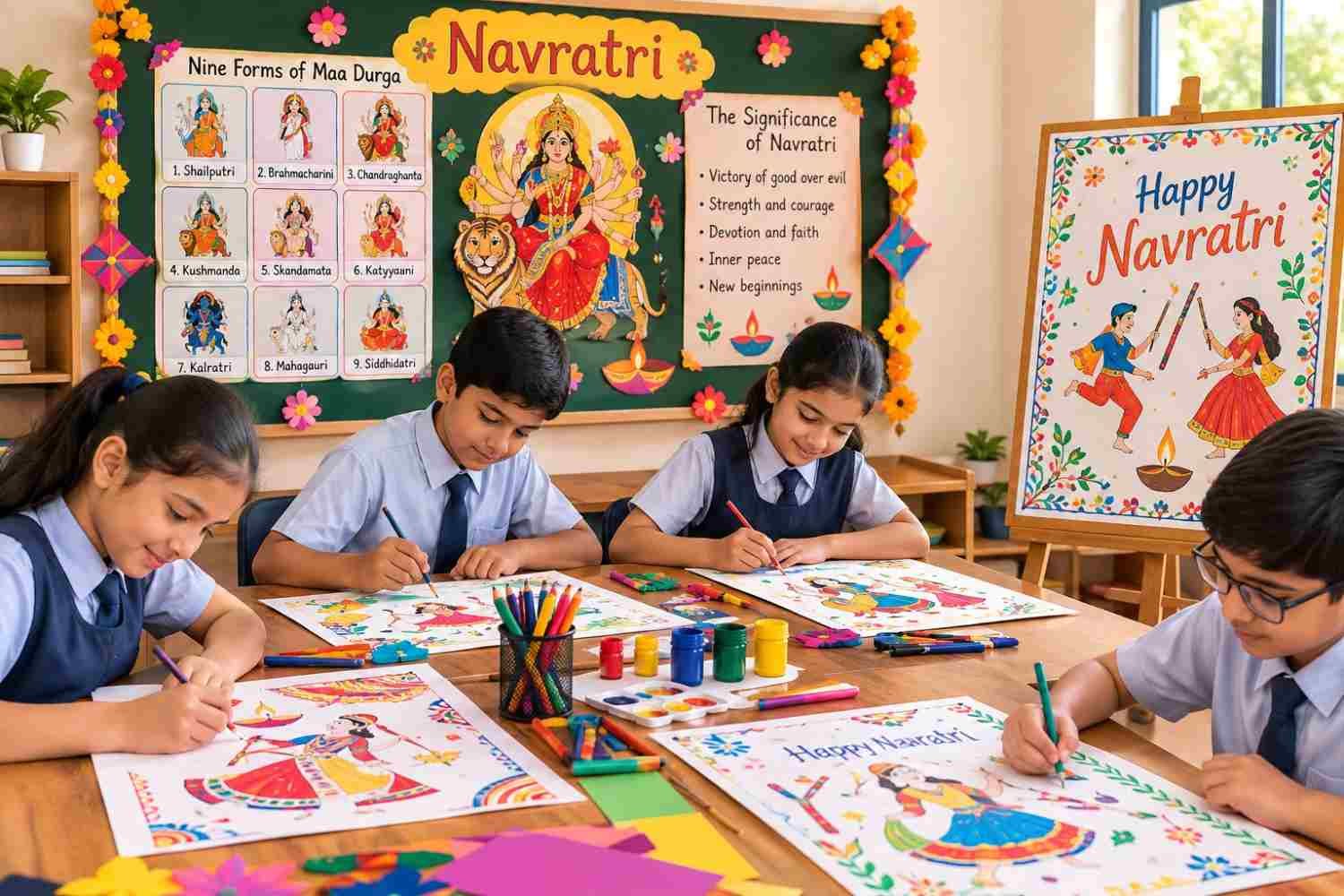
A chart and poster-making activity is a simple way to combine creativity with cultural learning.
Students can create posters explaining the significance of Navratri, the nine forms of Goddess Durga, traditional celebrations, Garba, or the different ways the festival is celebrated across India.
Younger students can use drawings, colours, and simple craft materials, while older students can create informative posters with facts and illustrations.
This activity helps students improve their creativity while learning more about Indian culture and traditions.
Students can create:
- Posters about the nine forms of Goddess Durga
- Charts explaining the history and significance of Navratri
- Garba and Dandiya-themed artwork
- Maps showing Navratri celebrations across different states
2. Learn and Perform Traditional Garba
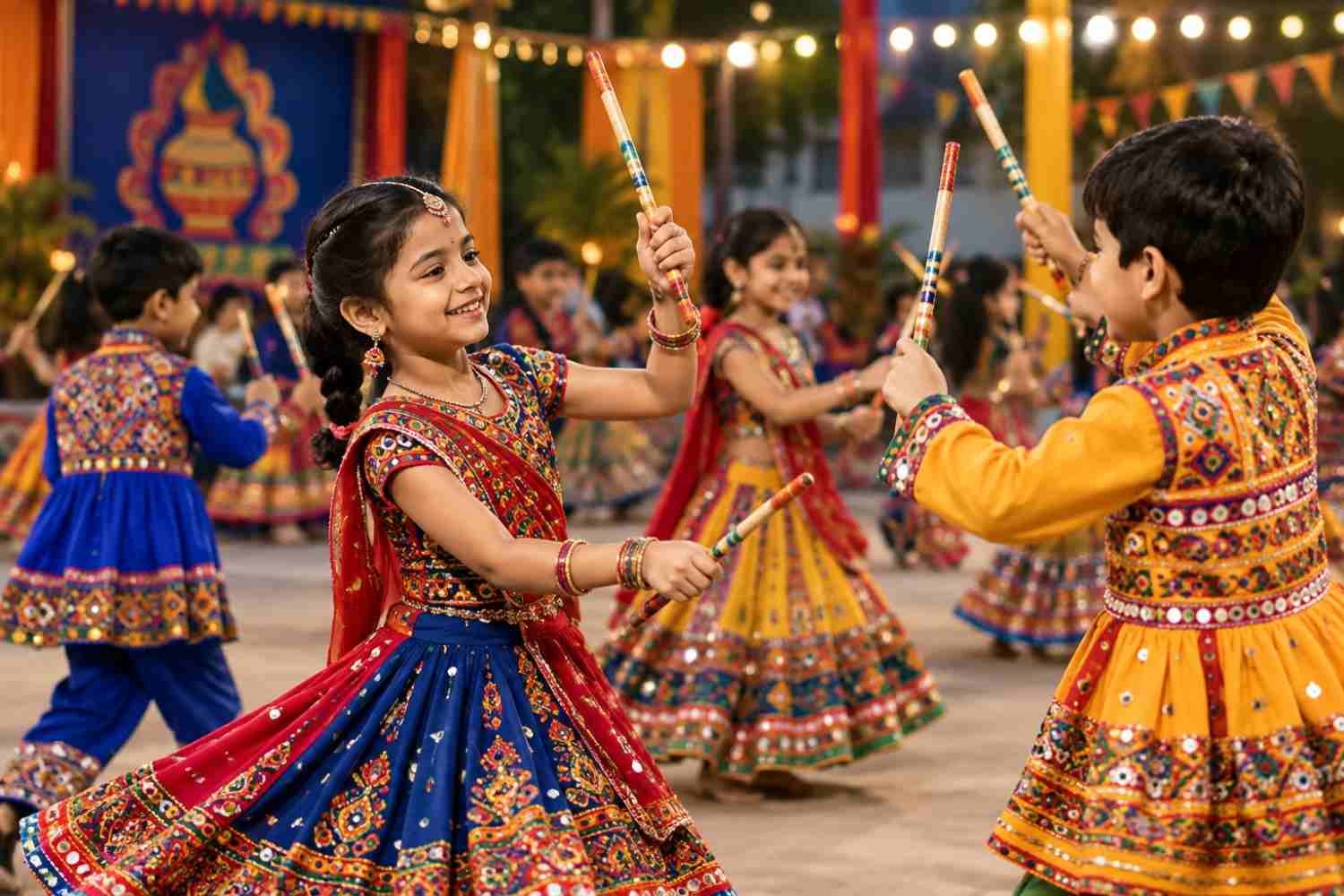
Garba is an important part of Navratri celebrations, especially in Gujarat. Schools can organise a simple Garba learning session where students learn basic steps and understand the cultural significance of the dance.
Students can practise in groups and perform Garba during a school celebration.
Such Garba activities for students encourage physical activity, coordination, rhythm, teamwork, and appreciation for traditional Indian performing arts.
Students can participate in:
- Learning basic Garba steps and movements
- Practising rhythm and coordination in groups
- Learning about the cultural significance of Garba
- Performing a short Garba routine during the school celebration
3. Navratri Classroom Decoration
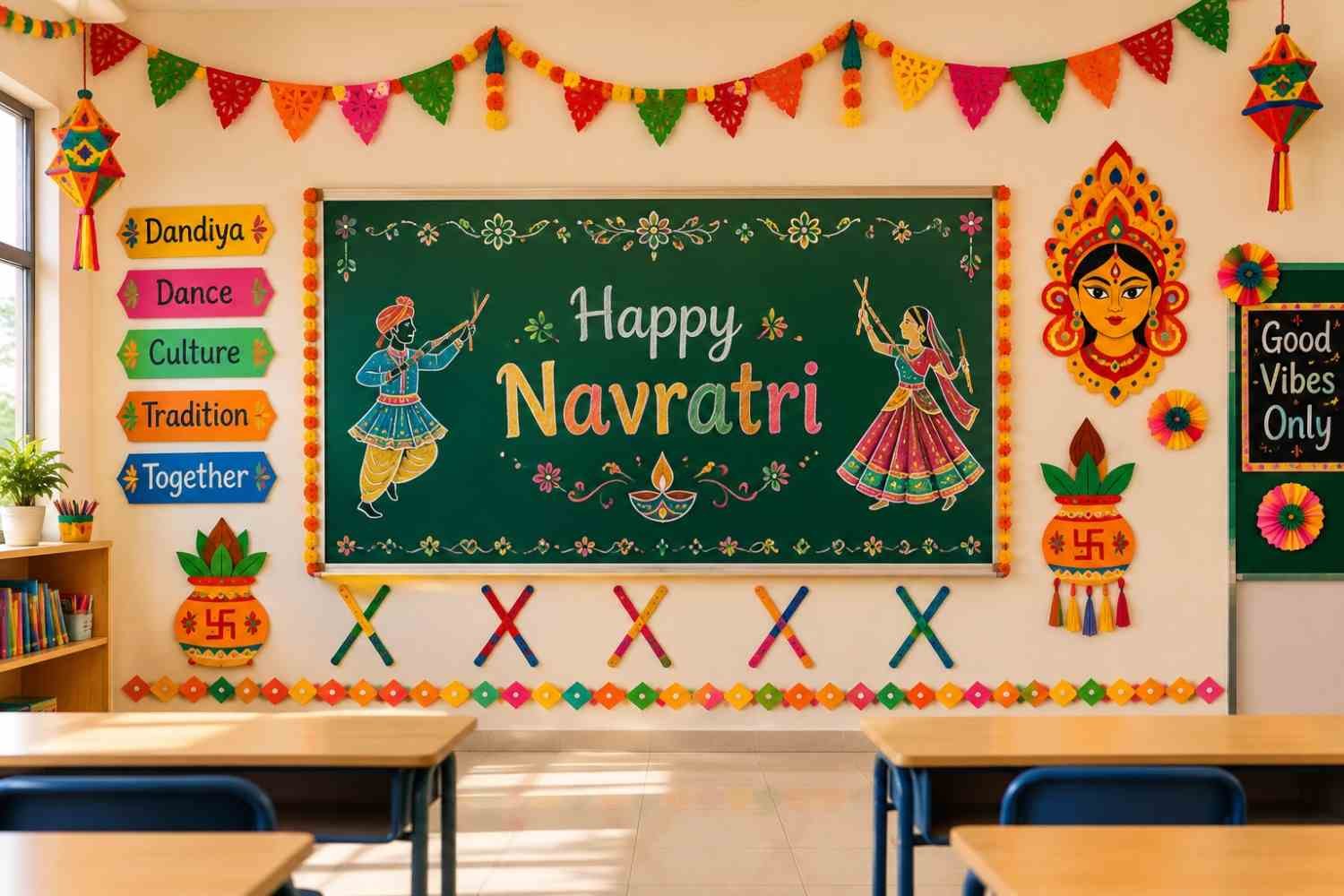
Classroom decoration is one of the most enjoyable Navratri decoration ideas for school.
Students can work together to decorate their classrooms with handmade torans, paper flowers, traditional motifs, drawings, colourful artwork, and other creative materials.
Schools can encourage students to use recycled or reusable materials. Teachers can also give each group a specific theme related to Indian culture or Navratri.
This transforms classroom decoration into a collaborative learning activity.
Decoration ideas can include:
- Handmade torans and paper flowers
- Traditional Gujarati patterns and motifs
- Navratri-themed drawings and paintings
- Recycled-material decorations
4. Navratri Quiz for Students
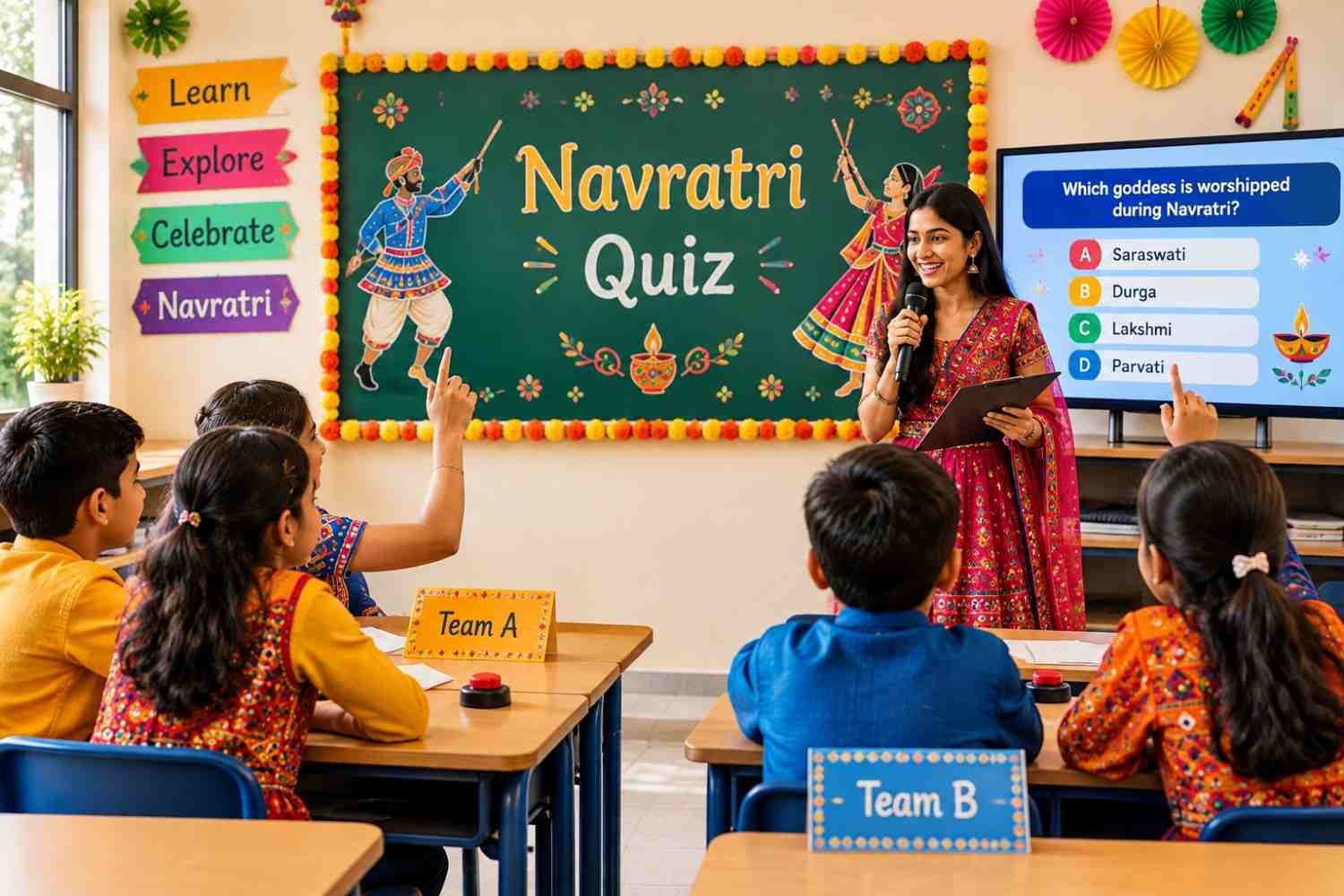
A Navratri quiz can make cultural learning exciting and interactive.
Questions can cover the significance of Navratri, the nine forms of Goddess Durga, Garba and Dandiya, traditional foods, regional celebrations, and Indian cultural traditions.
Schools can organise separate quiz levels for primary, middle, and senior students. An inter-house quiz can also encourage teamwork and healthy participation.
A quiz helps students develop their general knowledge while encouraging them to explore the cultural background of the festival.
Quiz topics can include:
- History and significance of Navratri
- Nine forms of Goddess Durga
- Garba and Dandiya traditions
- Navratri celebrations in different parts of India
5. Navratri Craft Activity
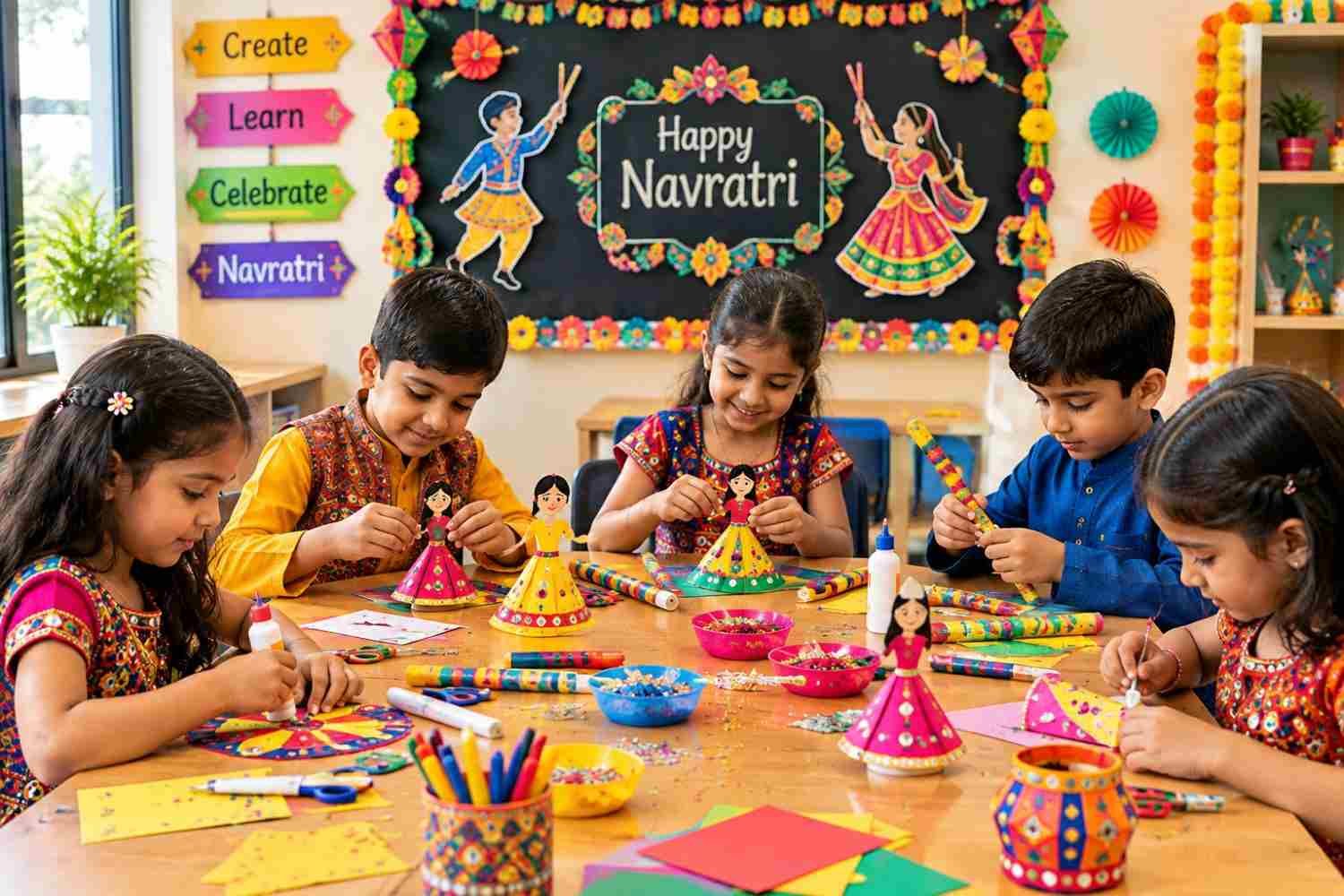
Creative Navratri craft ideas for kids can make the festival especially enjoyable for younger students.
Students can create paper diyas, decorative flowers, Dandiya sticks, greeting cards, traditional patterns, festival-themed artwork, and other simple crafts.
Teachers can explain the cultural meaning behind some of the designs and symbols used during Indian festivals.
Using recyclable materials can also introduce students to the importance of sustainable and responsible celebrations.
Craft ideas can include:
- Paper diyas and decorative flowers
- Handmade Dandiya sticks
- Navratri greeting cards
- Traditional festival patterns and artwork
6. Navratri Storytelling Session
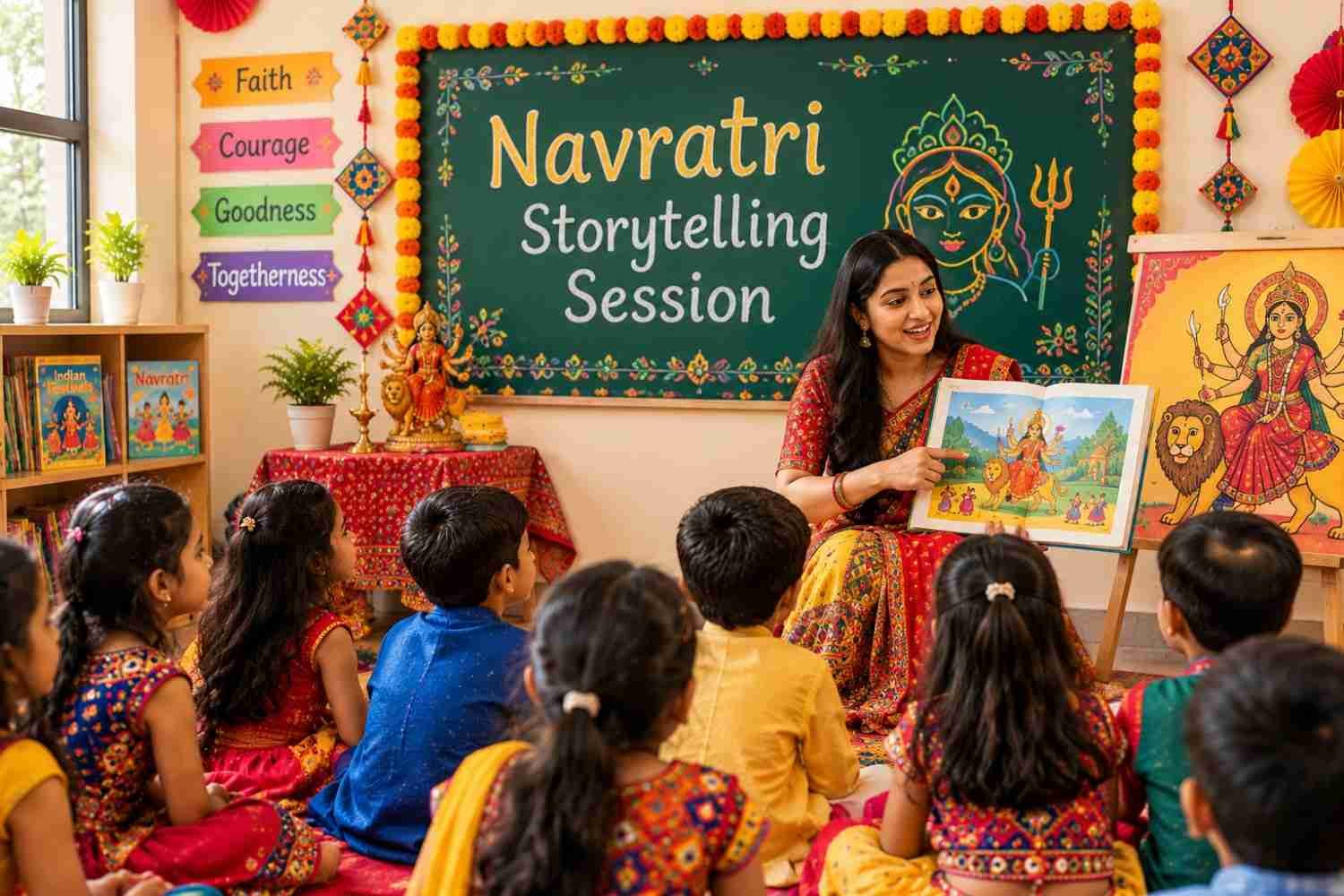
Storytelling can make cultural learning more interesting for children.
Teachers or students can share age-appropriate stories associated with Navratri and Goddess Durga. After the story, teachers can discuss values such as courage, kindness, determination, perseverance, and respect.
Students can also be encouraged to retell a story in their own words or present it to their classmates.
This activity develops listening skills, imagination, communication, confidence, and public-speaking abilities.
Storytelling activities can include:
- Listening to traditional Navratri stories
- Retelling stories in students’ own words
- Creating short story-based presentations
- Discussing values and lessons from the stories
7. Traditional Dress Day
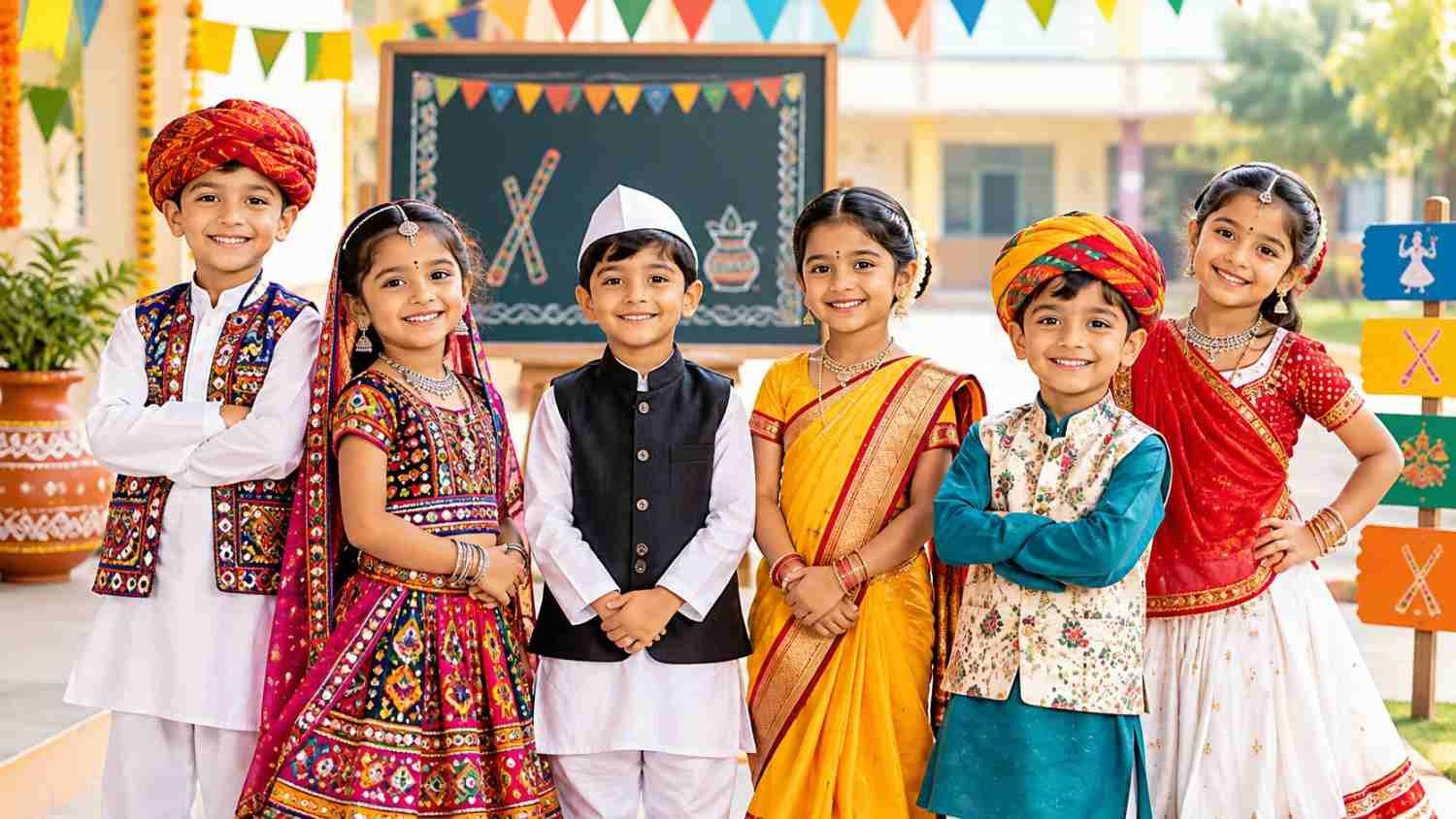
A traditional dress day can help students explore India’s cultural diversity.
Students can wear traditional outfits representing different regions of India and briefly explain their cultural or regional significance.
For example, students can learn about traditional clothing from Gujarat, Rajasthan, Maharashtra, Punjab, West Bengal, and other regions.
The activity can become a wonderful way to teach students that India’s festivals and traditions may have different expressions across different communities and states.
Students can explore:
- Traditional clothing from Gujarat
- Traditional outfits from Rajasthan and Maharashtra
- Traditional clothing from Punjab and West Bengal
- The cultural significance of different fabrics, colours, and designs
8. Rangoli and Floor-Art Competition
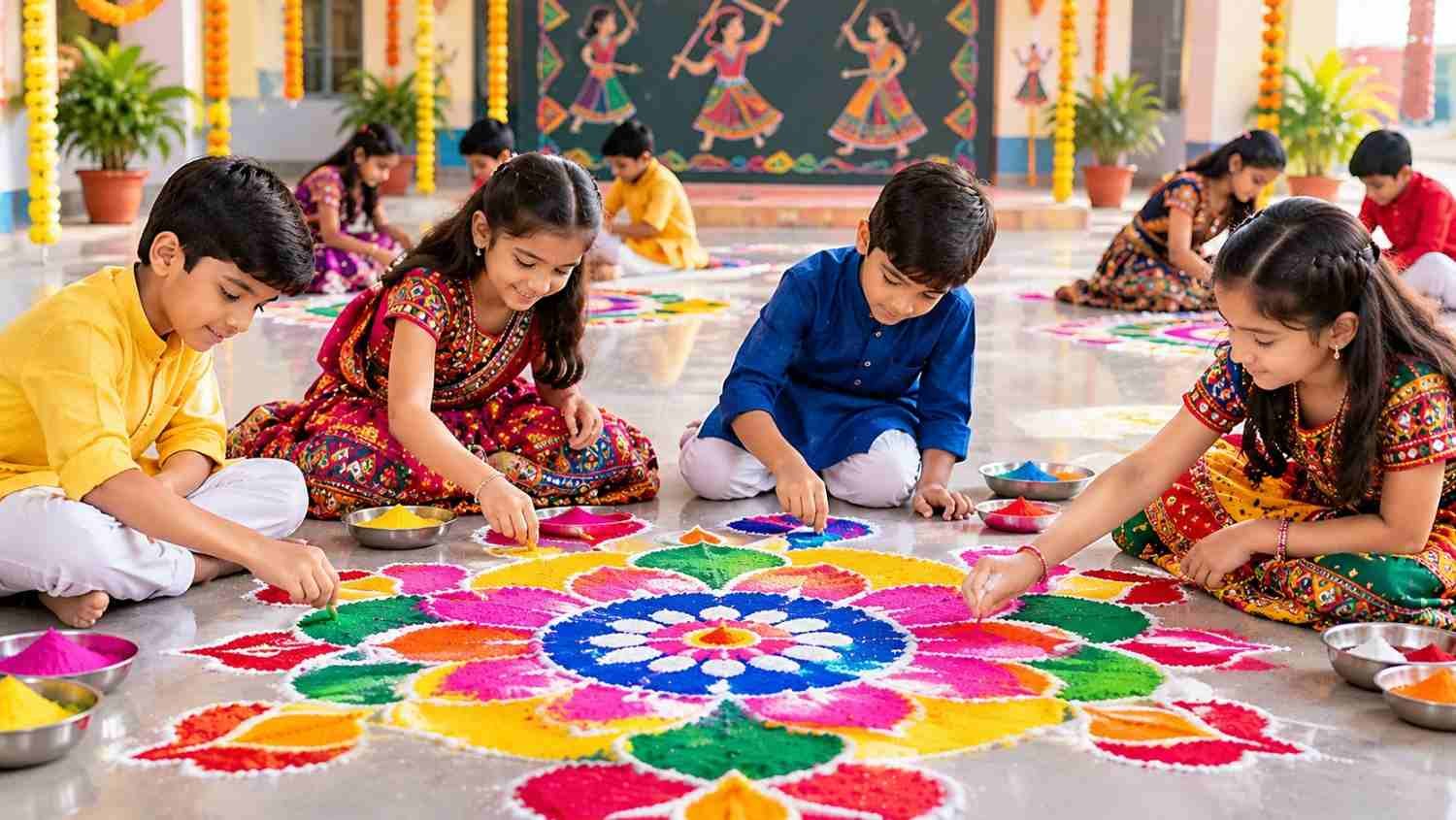
Rangoli is another creative activity that schools can include in their Navratri celebration in school.
Students can work individually or in groups to create traditional or contemporary rangoli designs. Schools can encourage the use of eco-friendly and reusable materials wherever possible.
Teachers can also introduce students to traditional patterns and explain how rangoli is used during festivals and special occasions.
Besides creativity, rangoli-making encourages concentration, patience, coordination, planning, and teamwork.
Students can create:
- Traditional geometric rangoli patterns
- Floral and festival-inspired designs
- Gujarati-inspired traditional motifs
- Creative rangoli using eco-friendly materials
9. Inter-House Cultural Competition
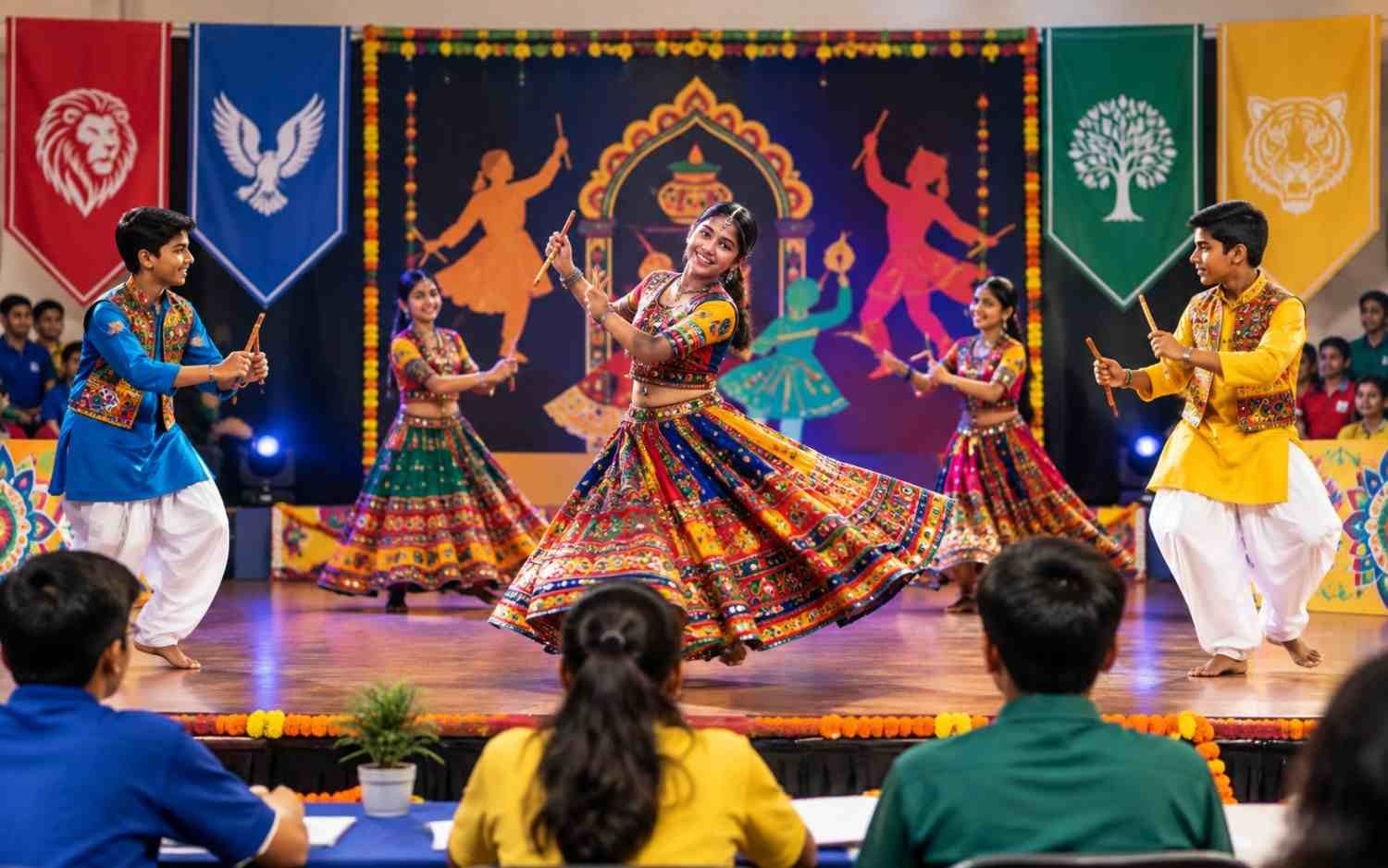
An inter-house cultural competition can bring several Navratri activities together.
Different houses can participate in Garba, traditional dance, singing, storytelling, quizzes, poster-making, or cultural presentations.
Students can research their topics, prepare together, and present their work before an audience. This provides opportunities to develop leadership, communication, collaboration, and presentation skills.
The emphasis can remain on participation, creativity, cultural learning, and teamwork.
Competition categories can include:
- Garba and traditional dance
- Singing and storytelling
- Navratri quiz competitions
- Poster-making and cultural presentations
10. Explore How Different Parts of India Celebrate Navratri
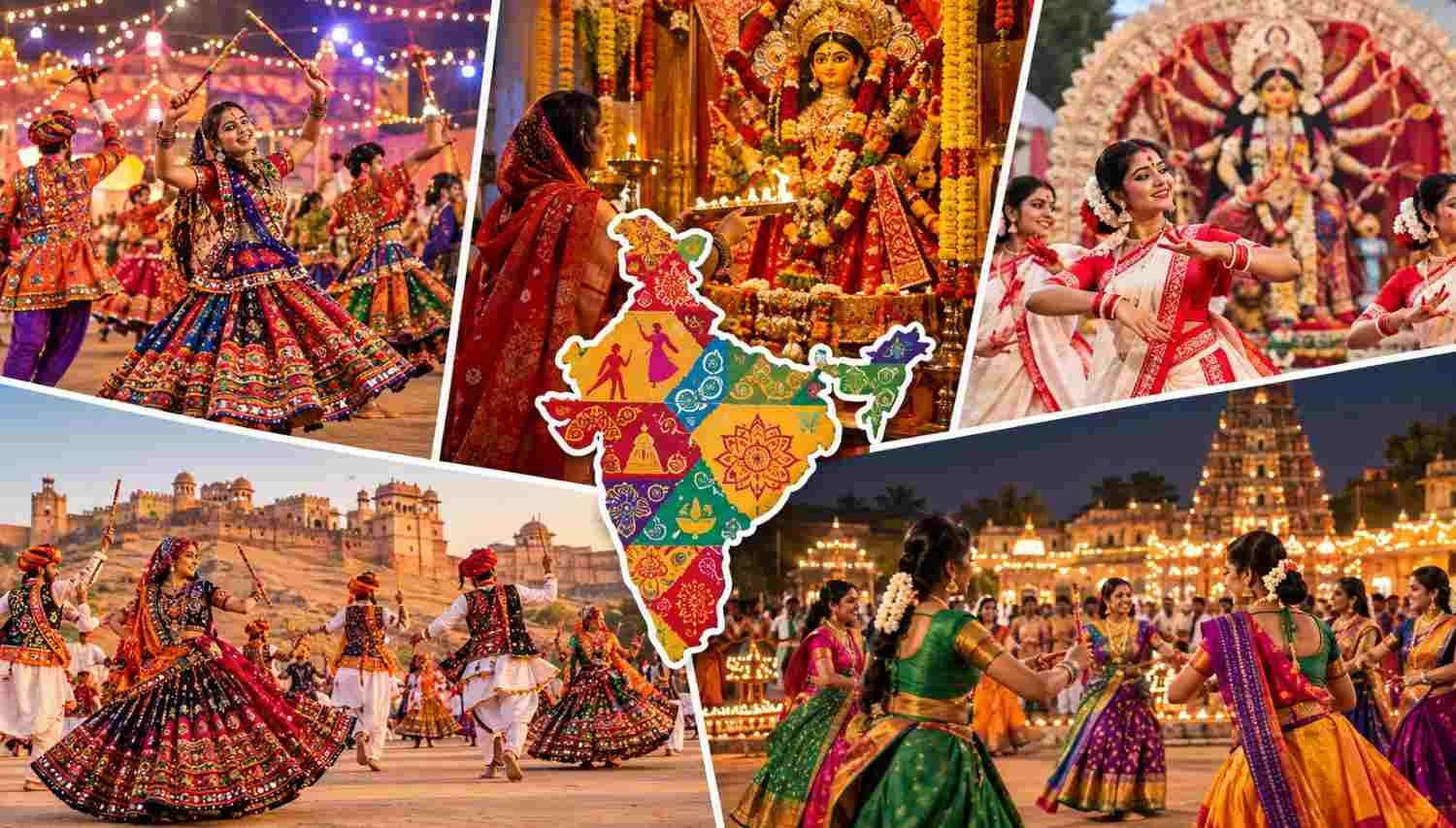
Navratri is celebrated differently across various parts of India. This diversity can become an interesting research project for students.
Students can work in groups and choose different states or regions to explore. They can research local traditions, food, music, dance, clothing, decorations, and cultural practices associated with Navratri.
Each group can present its findings through a chart, map, presentation, or classroom display.
This activity helps students understand India’s cultural diversity and encourages research and presentation skills.
Students can research:
- Regional Navratri traditions and customs
- Traditional food and festive dishes
- Local music, dance, and clothing
- Different styles of Navratri decorations and celebrations
Making Navratri Meaningful for Students
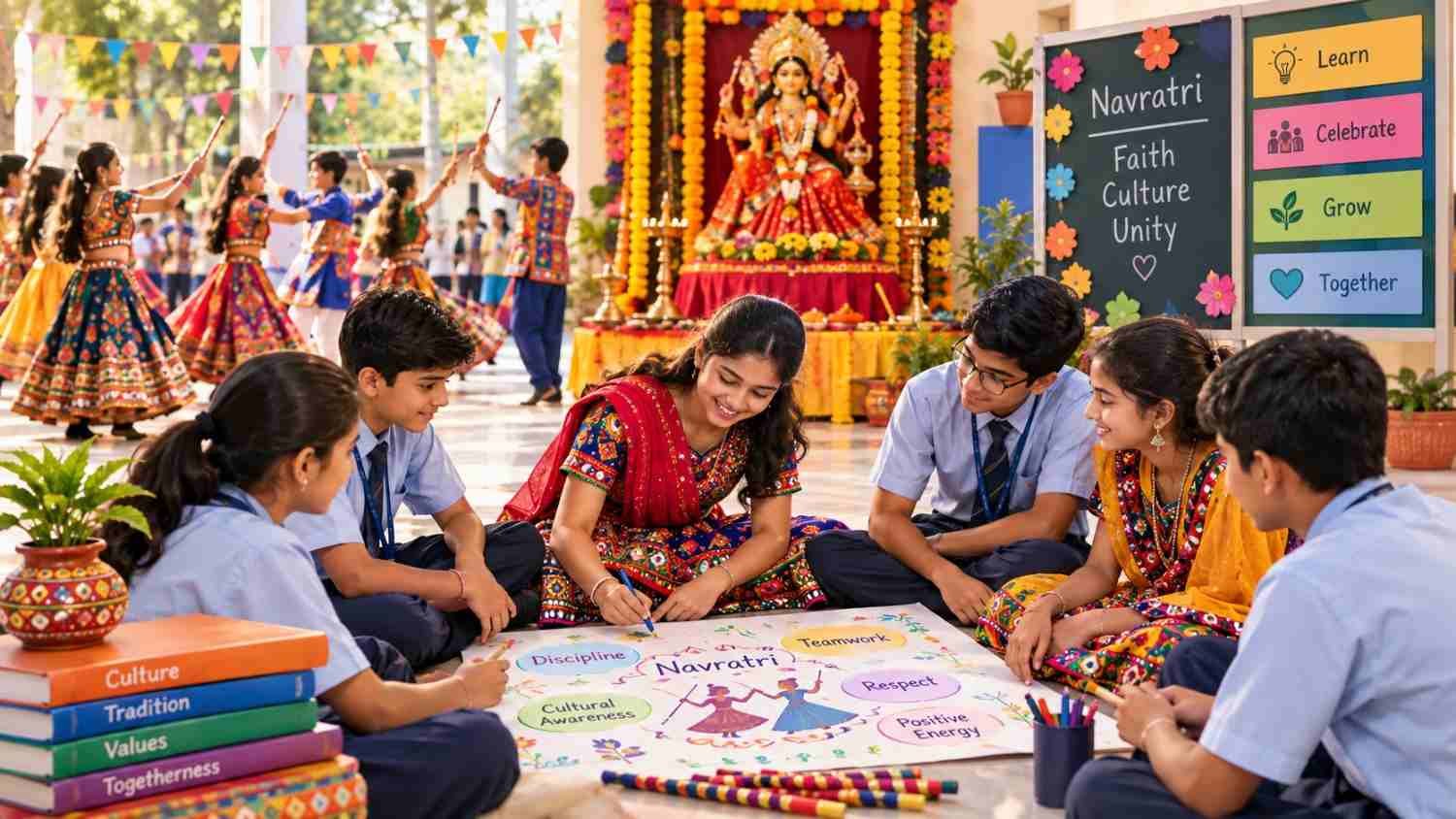
A school celebration becomes more valuable when students actively participate in the learning process.
At Divya Jyot School, activities beyond academics are part of a broader approach to student development, with opportunities in areas such as art, music, dance, sports, and other co-curricular activities.
Navratri can therefore be used as an opportunity for students to learn through creativity, teamwork, cultural exploration, and participation.
For parents exploring the Best CBSE Schools In Ahmedabad, it can be useful to look beyond classroom academics and consider how a school provides opportunities for creativity, communication, sports, cultural activities, values, and overall development.
Students at different age levels can participate in activities suited to their abilities. Primary students may enjoy crafts, colouring, storytelling, and simple dance activities, while older students can take part in quizzes, research projects, presentations, and cultural competitions.
Schools can also encourage eco-friendly celebrations by reducing waste, reusing materials, and choosing sustainable craft supplies.
Why Cultural Activities Matter in School Education
Cultural activities can give students opportunities to connect classroom learning with real-world experiences.
A festival such as Navratri can introduce children to traditional art, music, dance, stories, regional diversity, and social values. At the same time, activities such as group projects, performances, quizzes, and presentations help students practise communication, collaboration, creativity, and confidence.
This balanced approach is consistent with the broader educational philosophy followed by Divya Jyot School, which combines CBSE academics with values, creativity, co-curricular activities, sports, and life skills.
Conclusion
Navratri 2026 offers schools an excellent opportunity to combine celebration with meaningful learning. From Garba and traditional dress to poster-making, storytelling, crafts, quizzes, rangoli, and cultural research, students can enjoy the festive spirit while developing valuable skills.
The right Navratri activities for school students can make the celebration more than just an annual event. They can create opportunities for children to discover Indian culture, work with their classmates, express their creativity, and learn important values.
For schools such as Divya Jyot School, these celebrations can complement the broader goal of providing students with a balanced educational experience that goes beyond textbooks and encourages creativity, confidence, values, and holistic development.
A thoughtfully planned Navratri celebration in school can therefore become a memorable experience bringing together learning, culture, creativity, teamwork, and the joyful spirit of Navratri.