
The world of work is changing quickly. Technology, artificial intelligence, automation, digital communication, and new industries are influencing the way people work and the skills employers value. For today’s school students, preparing for the future is no longer simply about getting good grades and choosing a traditional career path.
Education still needs to provide strong academic foundations. But students also need opportunities to develop communication, creativity, critical thinking, collaboration, problem-solving, digital awareness, and the confidence to keep learning as the world changes.
This is where modern schools have an important role to play.
A school that prepares students for a changing career landscape does more than teach what is required for the next examination. It helps students understand how knowledge can be applied in real situations and encourages them to become adaptable, curious, responsible, and independent learners.
At Divya Jyot School, this broader approach to education can help students build a strong foundation for both academic development and the skills they may need in the future.
Why the Career Landscape Is Changing
For many years, students were often encouraged to follow a relatively predictable path: complete school, choose a stream, earn a degree, and enter a profession.
Career journeys today can be much less linear.
Technology has introduced new roles while changing the responsibilities associated with existing professions. Artificial intelligence, data, robotics, cybersecurity, digital platforms, biotechnology, and other emerging areas are influencing different sectors.
The Government of India’s recent skills initiatives, for example, include emerging areas such as artificial intelligence, robotics, cybersecurity, mechatronics, the Internet of Things, and semiconductors.
This does not mean every student needs to become a technology specialist.
Instead, students need the ability to learn, adapt, communicate, solve problems, and use technology thoughtfully regardless of the career they eventually choose.
That is why schools are increasingly looking beyond traditional academic models.
From Academic Learning to Skill-Based Learning
Academic knowledge remains important. Mathematics develops logical thinking, languages support communication, science encourages investigation, and social studies can help students understand society and the world around them.
The challenge is helping students connect that knowledge with practical situations.
For example, a science lesson can become more meaningful when students investigate a real-world problem. A mathematics activity can involve budgeting or analysing information. A language project can require students to research a topic and present their findings.
This type of learning helps answer an important question:
“How can I use what I have learned?”
CBSE’s skill-education framework has also emphasized experiential learning and connecting classroom learning with the world of work, including skill-based activities from the middle-school years.
What Is Future-Ready Education?
Future-Ready Education does not mean trying to predict exactly which jobs students will have 10 or 15 years from now.
Instead, it means giving students a strong foundation that allows them to respond to change.
A future-ready student can be encouraged to:
- Ask meaningful questions
- Think critically about information
- Solve unfamiliar problems
- Communicate ideas clearly
- Work effectively with others
- Use digital tools responsibly
- Learn from mistakes
- Explore different interests
- Adapt to new situations
- Continue learning independently
These abilities can remain valuable even when technologies, industries, and specific job roles change.
A recent NITI Aayog report on skilling also highlights the importance of integrating skills into schools early, including employability skills such as critical thinking, problem-solving, communication, financial awareness, and entrepreneurship.
Encouraging Critical Thinking
The ability to remember information is useful, but students also need to understand how to evaluate and use that information.
Modern classrooms can encourage students to ask:
Why does this happen?
How do we know this is true?
Is there another way to solve the problem?
What evidence supports this idea?
These questions encourage students to move beyond memorisation.
Critical thinking can become particularly important in a digital environment where students encounter enormous amounts of information every day.
Learning how to compare sources, identify reliable information, understand different perspectives, and make reasoned decisions can help students both academically and personally.
Building Strong Communication Skills
Good communication is relevant to almost every career.
Students may eventually need to explain an idea to a team, present a project, write an email, participate in a discussion, speak with customers, collaborate with colleagues, or communicate with people from different backgrounds.
Schools can develop these skills through presentations, classroom discussions, storytelling, debates, group projects, writing activities, and other forms of communication.
The objective is not simply to make students better speakers.
It is to help them express ideas clearly, listen carefully, ask questions, and communicate respectfully.
These are important Future Skills for Students because knowledge becomes more useful when students can communicate what they know.
Making Learning More Experiential
Students often remember experiences more effectively when they actively participate in the learning process.
Instead of only reading about a concept, students can investigate it, experiment with it, build something, discuss it, or apply it to a practical situation.
Experiential learning can include projects, experiments, presentations, field activities, creative assignments, research tasks, and collaborative problem-solving.
This approach also helps students understand that learning is not limited to textbooks.
The Indian education system has increasingly emphasized experiential, inquiry-driven, discovery-oriented, and learner-centred approaches as part of the broader direction of NEP 2020.
Introducing Students to Technology Responsibly
Technology is now part of everyday life, so students need more than basic familiarity with digital devices.
They need to understand how technology can be used for research, communication, creativity, collaboration, and learning.
At the same time, students should learn about responsible digital behaviour, privacy, online communication, evaluating information, and the appropriate use of emerging technologies.
Artificial intelligence provides a good example.
Students do not necessarily need advanced technical knowledge at an early age, but they can begin developing curiosity about how AI works, where it is used, what its limitations are, and how it can be used responsibly.
India has also introduced initiatives focused on building AI awareness and skills among school students.
Developing Creativity and Innovation
Future careers will not depend only on technical knowledge.
Creativity is useful when people need to develop new ideas, improve an existing process, design a solution, communicate a message, or approach a problem differently.
Schools can encourage creativity through art, writing, design, science projects, technology activities, entrepreneurship exercises, music, theatre, and open-ended assignments.
The important thing is to give students opportunities to create rather than always asking them to reproduce an existing answer.
A student who learns to ask, “What else could we try?”, is developing a valuable habit for future learning.
Teaching Students How to Work With Others
Many careers involve teamwork.
Students therefore need opportunities to work with classmates who may have different ideas, strengths, personalities, and approaches.
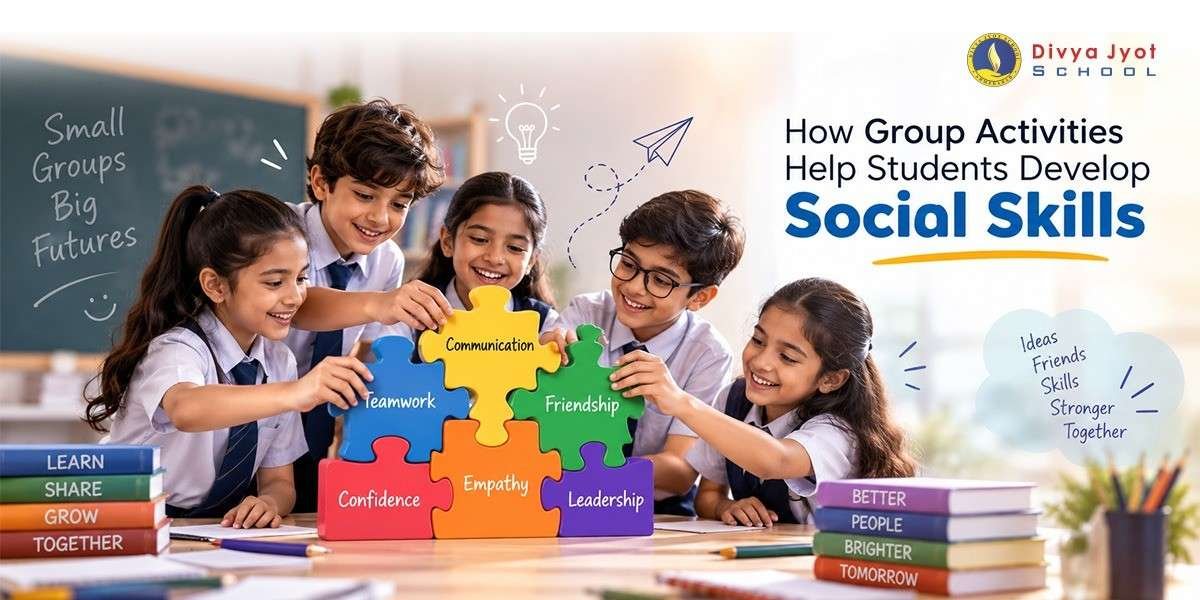
Group projects can teach students how to divide responsibilities, listen to others, manage disagreements, meet deadlines, and contribute to a shared goal.
These experiences help develop collaboration and interpersonal skills.
They also teach an important lesson: a successful team is not necessarily one where everyone thinks the same way. Different perspectives can sometimes lead to better solutions.
Helping Students Become Better Problem-Solvers
Real-world problems rarely come with a list of instructions.
Students may eventually encounter situations where they need to identify the problem, gather information, consider possible solutions, test an approach, and learn from the result.
Schools can introduce these habits through practical projects and challenges.
For example, students might be asked to design a way to reduce waste at school, develop a simple water-saving idea, create a small business concept, or find a solution to a community-related problem.
The specific activity is less important than the thinking process behind it.
Students learn that a problem is not necessarily something to fear. It can be an opportunity to investigate, experiment, and learn.
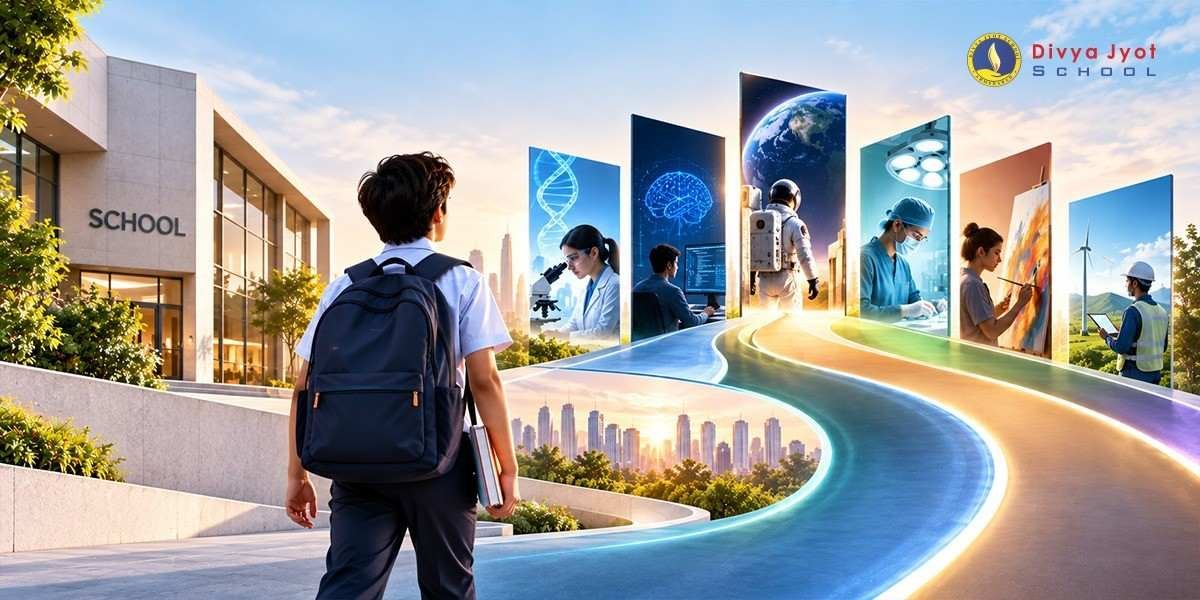
Connecting Education With Career Awareness
Career preparation should not begin only when students are about to leave school.
Students can gradually learn about different professions, industries, subjects, skills, and educational pathways as they grow older.
Career awareness can help students understand that there are many possible directions beyond the careers they hear about most often.
A student interested in science, for example, may eventually explore medicine, engineering, environmental science, biotechnology, research, data science, or other fields.
Similarly, an interest in art could connect to design, animation, architecture, digital media, advertising, fashion, or other creative areas.
The purpose of early career awareness is not to force students to choose a profession too soon.
It is to help them explore possibilities and understand their own interests and strengths.
Encouraging Lifelong Learning
One of the most important abilities students can develop is the ability to learn independently.
Technology and professional knowledge will continue to evolve. Students who understand how to learn, research, practise, ask for help, and improve their skills can continue developing long after they leave school.
The Ministry of Education’s SWAYAM Plus initiative reflects this broader emphasis on employment-oriented learning and continuing skill development, with programs designed around industry-aligned learning and professional development.
Schools can introduce the mindset early:
Learning does not stop when the lesson ends.
It can continue through reading, asking questions, experimentation, projects, hobbies, conversations, and independent exploration.
Developing Confidence and Adaptability
A changing career landscape can create uncertainty.
Students may not know which technologies will become important or which careers will grow in the future. Schools cannot predict every change, but they can help students become comfortable with learning and adapting.
A student who learns how to approach a new subject, work through a difficult problem, accept constructive feedback, and try again after making a mistake develops resilience.
These experiences can build confidence without creating the expectation that students must always get everything right the first time.
Modern Education for Career Success
Modern Education for Career Success should not be interpreted as training children for a particular job before they are ready.
Instead, it should provide the academic foundation, practical exposure, personal skills, and learning habits that students can carry into higher education and eventually the workplace.
A strong educational experience can combine:
Academic knowledge + practical learning + digital literacy + communication + critical thinking + creativity + collaboration
This combination gives students more opportunities to understand both what they learn and why it matters.
For parents, this can be an important consideration when looking at a school. Examination results are relevant, but families may also want to understand how a school supports communication, creativity, practical learning, technology awareness, and students’ overall development.
The Role of Teachers in Future-Ready Learning
Technology can provide students with access to enormous amounts of information, but teachers remain important in helping students understand and apply that information.
A teacher can ask the question that makes a student think differently.
They can identify when a student needs additional support, encourage a hesitant learner, challenge a confident student, and connect classroom concepts to real situations.
In a modern school, teachers can increasingly act as facilitators of exploration while maintaining strong academic guidance.
The goal is not to replace traditional teaching with technology.
It is to use the right tools and approaches to make learning more meaningful.
Why a Balanced Approach Matters
Preparing students for the future does not mean abandoning the fundamentals of education.
Children still need strong foundations in reading, writing, mathematics, science, languages, social understanding, and other academic areas.
They also need time for physical activity, creativity, relationships, play, and personal development.
The most useful approach is therefore not traditional education versus modern education.
It is about bringing the strongest elements together.
Students can learn foundational concepts while also applying them through projects. They can use technology while learning responsible digital behaviour. They can prepare for examinations while developing communication and problem-solving abilities.
This balance is at the heart of meaningful Future-Ready Education.
How Divya Jyot School Can Support Future-Focused Learning
At Divya Jyot School, the broader purpose of education can be viewed through the changing needs of students and the world they will enter.
A future-focused school environment can encourage students to build strong academic foundations while developing curiosity, communication, creativity, collaboration, critical thinking, and digital awareness.
For students, this means learning is not limited to preparing for the next test.
It can also involve asking questions, exploring interests, working with others, solving practical problems, and understanding how classroom knowledge connects with the world around them.
For parents, the goal is equally important: helping children grow into confident learners who can adapt as their education and career journeys develop.
Preparing Students for Careers That May Not Exist Yet
Nobody can know exactly what the career landscape will look like when today’s school students enter the workforce.
New professions may emerge. Existing roles may change. Some tasks may become automated, while new responsibilities may develop around technologies that are still evolving.
That uncertainty is precisely why education needs to focus on capabilities that can transfer across different situations.
Future Skills for Students are not limited to one profession or one technology.
They include the ability to think critically, communicate, collaborate, create, solve problems, learn independently, use technology responsibly, and adapt to change.
These capabilities can give students a foundation from which they can continue learning as new opportunities emerge.
Final Thoughts
The purpose of modern schooling is changing alongside the world around it.
Students still need knowledge, discipline, academic foundations, and strong study habits. But they also need opportunities to develop the skills that help them use that knowledge in practical situations.
Future-Ready Education is therefore less about predicting the future and more about preparing students to navigate it.
Through experiential learning, technology awareness, communication, creativity, critical thinking, collaboration, career exploration, and lifelong learning, schools can help students become more adaptable and confident learners.
At Divya Jyot School, creating an environment where academic learning is supported by practical skills and personal development can help students prepare for the opportunities and challenges that may come next.