

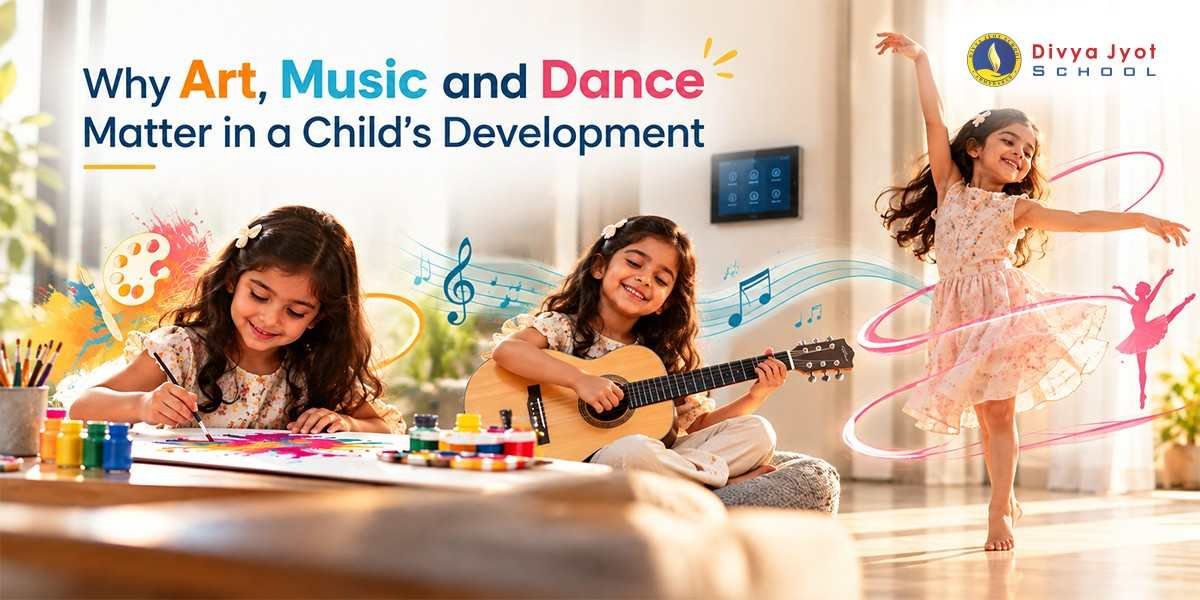
A child mixing colours, singing a familiar song or learning a dance step is doing more than enjoying an activity. Each experience creates opportunities to make choices, practise movement, listen carefully and express ideas.
The role of art, music and dance in child development becomes clearer when we look at these everyday learning moments. A drawing can start a conversation. A rhythm game can encourage turn-taking. A group dance can teach children to notice others and move together.
Parents understandably focus on reading, writing and academic progress. Creative experiences deserve space alongside these priorities because they offer different ways to participate, explore and communicate.
Children do not need exceptional artistic talent to benefit. What matters is having regular opportunities, suitable guidance and the freedom to learn without constant comparison.
Understanding the Role of Art, Music and Dance in Child Development
Creative activities engage children in several ways at once. Painting involves observation and hand movements. Singing combines listening, language and rhythm. Dance brings together movement, timing and awareness of space.
Research reviewed by the National Endowment for the Arts identifies promising connections between arts participation and children’s social and emotional development, while also noting unanswered questions and limitations in the evidence. The benefits depend on the activity, teaching approach and child’s experience. For parents, the practical question is therefore: What opportunities does this activity give my child to practise?
A welcoming art session may encourage experimentation. A supportive music group may help a child participate with others. An enjoyable dance class may create a positive experience of movement. These everyday opportunities give arts education its value.
Benefits of Art for Children
Developing Creativity and Independent Thinking
Art gives children room to explore possibilities. A tree can be drawn from memory, imagined in unusual colours or built from paper and discarded packaging. Children make decisions about materials, shapes and what they want to communicate.
Consider a child building a cardboard house. If the roof keeps falling, they might change its shape or add support. The activity becomes an opportunity to test ideas and solve a practical problem. Adults can encourage this thinking by asking, “What could you try next?” rather than completing the work themselves. Leaving some decisions open helps children take ownership of their creations.
Practising Fine Motor Skills and Observation
Drawing, modelling clay and using age-appropriate scissors give children opportunities to practise controlled hand movements. Different materials invite different actions: squeezing, rolling, cutting, tracing and brushing. Art also encourages close observation. A child drawing a leaf might notice its veins, uneven edges or changing shades.
These experiences have value even when the finished work looks simple. The learning happens through looking, handling materials and experimenting not only through producing something attractive.
Creating Space for Self-Expression
Children sometimes find it easier to begin with a picture than an explanation. Drawing a favourite place or creating a character can provide a starting point for conversation.
Ask, “Would you like to tell me about your picture?” and follow the child’s explanation. Avoid assuming that a particular colour or shape reveals a specific emotion. The aim is to offer another way to communicate while respecting what the child chooses to share.
Music and Child Development Learning Through Sound
Practising Listening Rhythm and Language
Singing and rhythm games invite active listening. Children hear a pattern, anticipate what comes next and respond through their voice or movement. Simple activities include copying a clap sequence, finding rhyming words in a song or changing the lyrics of a familiar tune. These tasks make listening and language practice enjoyable.
For example, children can invent a verse about their classroom. They choose words, fit them into a rhythm and listen to one another’s suggestions. Parents do not need musical training to join in. Singing together and exploring everyday sounds can be accessible starting points.
Learning Through Practice and Feedback
Learning a song or instrument involves repeated attempts. Children try a phrase, notice what was difficult and practise again. A manageable goal such as playing one short sequence can make progress visible. Adults can recognise the process with specific feedback: “You kept the rhythm steady that time.”
This approach helps children connect practice with improvement without expecting immediate success. Sessions should remain appropriate to the child’s age, interest and energy.
Participating With Others
Group music offers opportunities to wait, listen and contribute. In a singing circle, children may take turns choosing a song. In an ensemble, they practise entering at the right moment and noticing the group’s sound.
Participation can begin gradually. A hesitant child might first listen, then clap along and eventually sing. The quality of the experience matters more than how loudly or confidently a child performs.
Benefits of Dance for Children
Exploring Coordination and Spatial Awareness
Dance asks children to coordinate movements with timing and space. Stepping sideways, turning or following a sequence provides opportunities to practise balance and body awareness.
A simple movement game might involve moving slowly, changing direction and stopping when the music pauses. Children must notice both the instruction and the space around them.
Activities should suit participants’ abilities and take place in a clear, safe area. Comfortable movement is more useful than demanding steps that leave children frustrated.
Expressing Ideas Through Movement
Dance can communicate ideas without a spoken explanation. Children might create movements for rain, a growing plant or a character from a story. There can be several valid interpretations. One child may represent rain with small finger movements; another may use broad arm gestures. Giving children choices encourages creative expression. Joining a pair or small group can also make participation feel more manageable than immediately performing in front of an audience.
Discovering Culture and Community
Dance and music can introduce children to traditions and the communities connected with them. In Gujarat, a Garba activity can include discussion about the occasion, music and meaning alongside learning steps. Exploring other regional traditions broadens the experience. Teachers and parents can encourage curiosity through questions such as, “When is this dance performed?” or “What instruments can you hear?” Cultural learning becomes richer when children understand the context behind a performance.
How Creative Activities Support Social and Emotional Learning
A shared mural, group song or dance sequence creates practical situations in which children work together. They decide who contributes what, share materials and respond when ideas differ.
For example, children creating a mural may need to agree on a theme while allowing room for individual contributions. An adult can help them listen and negotiate without making every decision.
Creative work also involves manageable setbacks: a model falls apart, a lyric is forgotten or a movement needs another attempt. Supportive guidance can help children pause, adjust and continue.
Confidence grows through experiences of participation and progress. A useful response is specific: “You tried another way when the first one did not work.” This recognises effort without comparing children.
Do the Arts Improve Academic Performance
The following ideas are starting points rather than fixed developmental requirements. Adapt them to each child’s interests and abilities.
Age group | Art | Music | Dance and movement |
Ages 3–5 | Large crayons, washable painting and simple clay play | Action songs and short clapping games | Animal movements and stop-and-start games |
Ages 6–9 | Collages, illustrated stories and simple models | Group singing and rhythm patterns | Short sequences and paired movement activities |
Ages 10–12 | Posters, sketchbooks and collaborative projects | Songwriting and beginner instrumental exploration | Choreography and exploration of different traditions |
Offer variety while leaving time for favourites. Children often discover their preferences through repeated, relaxed participation.
How Parents Can Encourage Creativity at Home
Creative experiences can fit into ordinary family life. Keep paper and drawing materials accessible, sing during routines or invite children to create movements for a favourite song. Begin with a short, manageable activity and follow the child’s interest. A few minutes of enjoyable participation can be a better starting point than an ambitious session that becomes tiring.
Ask open questions: “How did you make that?” or “Which part would you like to change?” Avoid correcting every detail. Respect different comfort levels, too. Some children prefer quieter music, smaller groups or seated movement. Offering choices helps them participate comfortably. Preserve time for rest, free play and other interests rather than filling every afternoon with classes.
What Parents Should Look for in a School’s Arts Programme
Look beyond an impressive annual performance. Ask how children experience art, music and dance during ordinary school weeks.
Useful questions include:
- Do all children have opportunities to participate?
- How are beginners and hesitant learners supported?
- Is there room for experimentation and student choice?
- How are activities adapted for different abilities?
- Does feedback recognise learning and progress?
Facilities can support creative work, but everyday teaching and access matter just as much.
Creative Learning at Divya Jyot School
Divya Jyot School describes an educational approach that combines academics, sports, co-curricular activities and life skills. Its arts and cultural activities include opportunities to explore art, music, dance and drama. The school’s website also lists art and craft studios, music rooms, and dance and drama spaces. Parents can explore these resources and ask how creative activities are organised for their child’s age group, how participation is encouraged and what an ordinary session involves.
Conclusion
Art, music and dance give children meaningful opportunities to observe, practise, collaborate and express themselves. The strongest experiences allow room for curiosity, mistakes and individual preferences. Children do not have to become accomplished performers to benefit from creative participation. Making something, learning a rhythm or contributing to a group can be worthwhile in itself. To learn how creative experiences fit into a balanced school education, explore life at Divya Jyot School and connect with the school through its website to discuss opportunities for your child.