

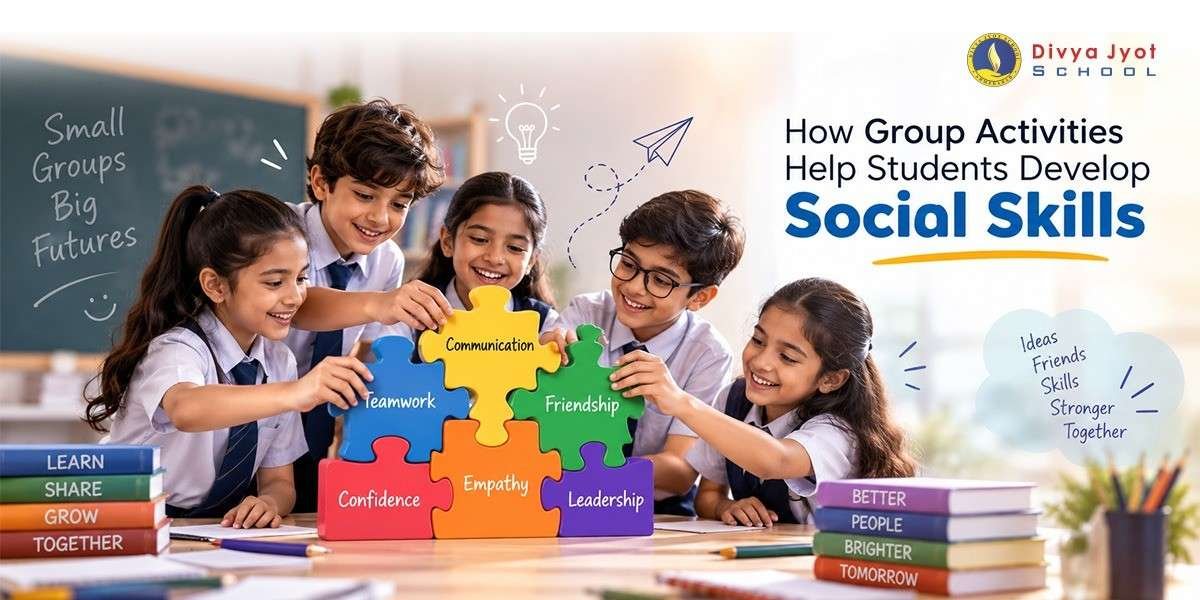
Imagine a classroom where students are not just sitting at their desks, listening to a lesson, or completing worksheets. Instead, they are discussing ideas, building something together, helping a classmate, and laughing while solving a challenge.
One student is explaining an idea. Another is listening carefully. A third student is trying to find a solution, while someone else is encouraging the team to keep going.
What looks like a simple classroom activity is actually an opportunity for children to develop skills that will stay with them throughout life.
This is why group activities for students are such an important part of a well-rounded education. They give children opportunities to communicate, cooperate, solve problems, and understand how to work with people who may think differently from them.
In today’s learning environment, academic knowledge is important, but students also need confidence, empathy, teamwork, and the ability to build positive relationships. Group learning creates a practical space where these skills can grow.
Why Social Skills Matter in a Child’s Education
Think about the situations children experience every day.
A student wants to join a game but doesn’t know how to ask. Another child has an idea but feels nervous sharing it. Two classmates disagree about a project, or a student needs help understanding a task.
These everyday moments require social skills.
Social skills in students include the ability to:
- Communicate thoughts and feelings.
- Listen to others.
- Cooperate with classmates.
- Respect different opinions.
- Share responsibilities.
- Manage disagreements.
- Show empathy.
- Build confidence in social situations.
Children develop these abilities gradually through practice and interaction. A classroom that encourages positive communication and shared learning can give students more opportunities to use them.
What Makes Group Activities Different From Individual Learning?
Individual learning gives students time to focus on their own understanding and progress. Group learning adds another important dimension: learning with and from others.
When students work together, they have to think beyond their own answers.
They may need to ask:
“What does my teammate think?”
“How can we divide this task?”
“What should we do if our first idea doesn’t work?”
“How can everyone participate?”
These questions encourage students to become more aware of others while working toward a shared goal.
For example, a group of students preparing a science model may divide responsibilities, discuss design ideas, and combine their work. The activity teaches them about science, but it also creates opportunities to practice collaboration and communication.
That is one of the most valuable benefits of group activities in school.
A Simple Group Project Can Teach a Big Lesson
Let’s take a familiar classroom situation.
A teacher asks five students to prepare a presentation about the environment.
At first, everyone has a different idea. One student wants to talk about recycling. Another wants to focus on saving water. Someone else wants to create a poster.
If every student insists on doing only their own idea, the project becomes difficult.
But when they listen to one another, they can combine their ideas into a single presentation.
One student researches the topic. Another prepares the poster. A third organizes the information. The remaining students practice presenting the content.
By the end, they have completed a school assignment. But they have also practiced listening, planning, responsibility, and teamwork.
This is how teamwork activities for students turn everyday learning into a meaningful social experience.
Communication Skills Grow Through Real Conversations
Children don’t become confident communicators simply by memorizing communication rules. They need opportunities to speak, listen, ask questions, and respond to others.
Group activities naturally create these opportunities.
During a classroom discussion, students may explain their opinions, ask for clarification, or suggest a different approach. A group presentation may encourage a shy student to speak in front of classmates. A role-playing activity may help children practice expressing themselves in different situations.
These small experiences can support the development of communication skills for students.
Teachers can make this process more effective by encouraging students to:
- Speak clearly and respectfully.
- Listen without interrupting.
- Ask questions when they do not understand.
- Give classmates a chance to speak.
- Express disagreement politely.
The goal is not to make every child speak in the same way. It is to help each student become more comfortable expressing ideas and interacting with others.
What Happens When a Quiet Student Joins the Group?
Every classroom has students with different personalities.
Some children enjoy speaking in front of everyone. Others prefer listening first and sharing their thoughts later.
A supportive group activity can provide a comfortable opportunity for quieter students to participate.
For instance, a child who may not raise their hand during a large classroom discussion might feel more comfortable sharing an idea with a small team.
When classmates listen positively, the student gets an opportunity to experience what it feels like to be heard.
With repeated opportunities and encouragement, students may gradually become more confident in participating.
This is an important part of building social skills in students: creating an environment where every child feels that their contribution matters.
Learning to Listen Is Just as Important as Learning to Speak
Good teamwork requires more than sharing ideas. It also requires listening.
Imagine students working on a creative project. One child suggests making a model, while another suggests preparing a chart. Instead of dismissing each other’s ideas, they discuss the possibilities and decide how to combine them.
This kind of interaction teaches students that different perspectives can contribute to a better result.
Teachers can encourage active listening by asking students to:
- Listen carefully when someone is speaking.
- Repeat or summarize a teammate’s idea.
- Ask questions to understand the suggestion.
- Respond respectfully.
- Consider different solutions before making a decision.
These habits can help students communicate more thoughtfully in school and in everyday life.
The Real Meaning of Student Collaboration Skills
Collaboration is more than sitting together at the same table.
True collaboration means working together, sharing responsibility, and contributing to a common purpose.
Consider a group art activity. Students may create a large classroom mural together. One child draws the background, another adds the characters, and someone else works on the details.
Each student contributes something different.
The final artwork belongs to the group, but every student has played a part in creating it.
This is how student collaboration skills develop through practical experiences. Children learn that their own contribution matters, while also understanding the value of other people’s work.
Group Activities Can Make Problem-Solving More Interesting
Some of the best learning happens when students face a challenge together.
A teacher might ask a group to build a bridge using paper and tape, solve a puzzle, or design a simple structure with limited materials.
The students must decide what to do, test their ideas, and make changes when something doesn’t work.
Along the way, they may discover that:
- Different people have different strengths.
- A problem can have more than one solution.
- Listening can improve an idea.
- Mistakes can become learning opportunities.
- Working together can make difficult tasks easier.
These activities encourage problem-solving while giving students practical opportunities to communicate and collaborate.
Learning Empathy Through Classroom Experiences
Empathy means trying to understand how another person feels or sees a situation.
Students can develop empathy through everyday interactions with classmates.
For example, a child may notice that a teammate is nervous about presenting. Instead of making fun of them, the student may offer encouragement or help them practice.
Another student may be struggling to complete a task. A classmate might offer support.
These small moments can teach children the importance of kindness, patience, and understanding.
Group activities do not automatically make every child empathetic, but they can create opportunities for students to practice these behaviours with guidance from teachers.
What About Disagreements During Group Work?
Not every group activity will be perfectly smooth.
Students may disagree about who should lead, which idea to choose, or how to complete a task. These situations can become useful learning opportunities when teachers guide students appropriately.
Instead of simply solving every disagreement for them, teachers can encourage students to:
- Explain their point of view.
- Listen to the other person.
- Discuss possible solutions.
- Find a fair compromise.
- Focus on the shared objective.
For example, if two students want different designs for a project, the teacher might ask them to compare both ideas and decide whether they can combine them.
This helps students understand that disagreements can be handled through respectful communication.
Teamwork Is Not Limited to Classroom Projects
Some of the most memorable group activities happen outside regular lessons.
Sports, cultural events, art clubs, school celebrations, and creative competitions all give students opportunities to work with others.
At Divya Jyot School, activities beyond academics form part of the school’s broader approach to student development. The school highlights sports, creativity, leadership, and life skills alongside academic learning. Its sports programme also focuses on teamwork, discipline, and participation.
A sports team, for example, teaches students to communicate during a game, support teammates, and work toward a shared goal.
A cultural performance may require students to practice together, coordinate their roles, and encourage one another before going on stage.
These experiences can make learning more engaging while creating opportunities for social development.
How Divya Jyot School Encourages Holistic Student Development
At Divya Jyot School, Shilaj, Ahmedabad, education is presented as more than academic learning. The school emphasizes a balance of academics, sports, co-curricular activities, values, and life skills.
Its approach includes opportunities for students to explore creativity, participate in activities, and develop confidence through learning experiences.
Group activities fit naturally into this broader learning environment because they give students opportunities to interact, share responsibilities, and learn through experience.
Whether students are working on a classroom project, participating in sports, or taking part in a school event, each activity can become an opportunity to develop skills that support their personal growth.
The aim is to encourage students to become confident learners who can communicate, cooperate, and contribute positively to their surroundings.
How Teachers Can Make Group Activities More Effective
A successful group activity needs thoughtful planning.
Simply dividing students into teams does not guarantee that everyone will participate equally. Teachers can make activities more meaningful by creating clear expectations and giving students appropriate guidance.
Here are some useful approaches:
Give Every Student a Role
Assign different responsibilities so that each student has an opportunity to contribute.
Encourage Respectful Communication
Teach students to listen, speak politely, and appreciate different opinions.
Rotate Responsibilities
Allow students to experience different roles, including leadership, presentation, organization, and support.
Make Activities Age-Appropriate
Choose tasks that match students’ abilities and interests.
Encourage Reflection
After an activity, ask students what they learned, what went well, and how they worked together.
Celebrate Team Effort
Recognize cooperation, creativity, effort, and improvement not just the final result.
These strategies can help make group activities more inclusive and useful for student development.
Simple Group Activities Teachers Can Try
Schools do not need complicated equipment to encourage teamwork.
Here are a few practical ideas:
- Story Building: Each student adds a part to a shared story. This encourages listening and creativity.
- Team Puzzle Challenge: Students work together to solve a puzzle within a set time.
- Group Poster Making: Students create a poster on a topic such as nature, kindness, or healthy habits.
- Classroom Role Play: Students act out everyday situations to practice communication and problem-solving.
- Team Sports: Students participate in structured games that encourage cooperation and fair play.
- Group Presentations: Students research a topic, divide responsibilities, and present their work together.
The best activity is one that gives students a clear goal and an opportunity to participate meaningfully.
Why These Skills Matter Beyond School
The social skills children practice at school can support them in many areas of life.
As students grow, they will encounter new classmates, teachers, teams, communities, and eventually workplaces. They will need to communicate ideas, work with different people, solve problems, and manage disagreements.
The ability to cooperate and express oneself respectfully can be useful in all of these situations.
Group activities cannot guarantee that every student will develop the same skills at the same pace. However, they can provide regular opportunities for practice, guidance, and reflection.
That is why social development deserves a place alongside academic learning.
Final Thoughts
The value of group activities for students goes far beyond making a classroom more fun.
When children work together, they get opportunities to practice communication, listening, teamwork, empathy, responsibility, and problem-solving.
A group project may teach students how to prepare a presentation. A team game may teach them how to cooperate. A classroom discussion may help them become more comfortable expressing an opinion.
Each experience contributes to a broader learning journey.
At Divya Jyot School, Shilaj, Ahmedabad, a balanced approach to academics, activities, creativity, sports, and life skills provides a foundation for holistic student development.
For parents and educators, the message is simple: give children opportunities to learn together, encourage respectful interaction, and allow them to discover the value of teamwork.
Because education is not only about what students learn from books. It is also about how they learn to communicate, collaborate, and grow with others.