

You have been preparing for this day for weeks. The uniform is ready. The bag is packed. And yet, on the morning of the first day, your child is clinging to your leg, crying, or standing frozen at the gate with a look that makes you want to take them straight back home.
This moment is one of the most emotionally charged experiences of early parenthood. And it is completely normal. For the child and for you.
If you are searching for child school anxiety tips that actually work, the first thing to understand is this. Anxiety on the first day is not a sign that something is wrong. It is a sign that your child has formed strong attachments, is aware that something unfamiliar is about to happen, and does not yet have the emotional toolkit to process that alone. Your job is not to eliminate that anxiety. It is to help them move through it with confidence.
Why Young Children Feel Anxious About Starting School
For most young children starting school for the first time, the anxiety is rooted in one core fear: separation. The anxiety that most young children experience when beginning school for the first time is a single fear separation. This is probably the first time they are placed in an environment they’ve never been in before, with strangers around them and no home anywhere near them.
This change of starting school changed the predictable part of their day. New classrooms, new bathrooms, new lunch tables, and a new teacher whose voice they don’t yet trust. All these are little unknowns. They can be very overtaxing to a young child when combined.
Physical signs are things to be aware of. Your child might complain of stomach aches on school mornings, have trouble sleeping the night before, and become clingy, or suddenly irritable or withdrawn. These are all normal expressions of anxiety in young children starting school who do not yet have the words to say, “I am scared.”
Start Before the First Day
The most effective child school anxiety tips begin well before the first morning ever arrives.
Come to the school for a pre-visit. If a school has an orientation day or campus visit, take advantage of it. If possible, allow your child to view the classroom, interact with the teacher, and tour the corridors before the first day, thus taking many of the unknowns out of the picture. A familiar face and a familiar space reduce anxiety significantly.
Talk positively about school. A tearful child needs concrete assurance rather than vague reassurances such as it’s okay. Specific details do. Inform them about what the classroom is like. Explain what is going to occur in the first hour. Say something that they are sure to like. The more clearly this picture is depicted, the fewer worries the imagination fills it with.
Create the new routine early. Prep the school week before school starts gently change sleep and waking patterns to align with school. If a child comes to school an hour earlier than his usual day, he is off to a bad start.
Read books about entering school together. Reading stories about what happens to characters on their first day helps children to reflect on their own emotions by reading the experiences of others and, in turn, initiates a discussion about what they are feeling.
How to Calm a Child Before School on the First Morning
Knowing how to calm a child before school starts the night before, not on the morning itself.
Wait until the evening before to set up the uniform and to pack the bag no last-minute searching. Try not to wake the child too late, allowing him or her to have a proper breakfast. Sit in a relaxed and stable way with your own energy. Parents teach their children how to behave by their attitude. Children are more attuned to their parents’ attitude of anxiety than to anything. Obviously you’re nervous; they’re nervous too.
Here are the most practical tips for a smoother first morning:
- Don’t over-explain or over-reassure the night before, as there can be too much reassurance about it being okay, which can provoke worry.
- Establish a brief and regular “goodbye” routine. If I can do something that tells her that I am leaving and I will be back, I will do it hugs, that kind of thing, anything, anything that lets her know that.
- Be firm and friendly but short in your goodbye. A “long goodbye” means there is something to be worried about.
- The place of one little aspect that your child is thrilled with, regardless of whether it’s a brand new pencil case or a playground they viewed on their journey.
Knowing how to calm a child before school is really about reducing uncertainty at every step. The more predictable the morning feels, the less room there is for anxiety to grow.
When You See a Child Crying on the First Day of School
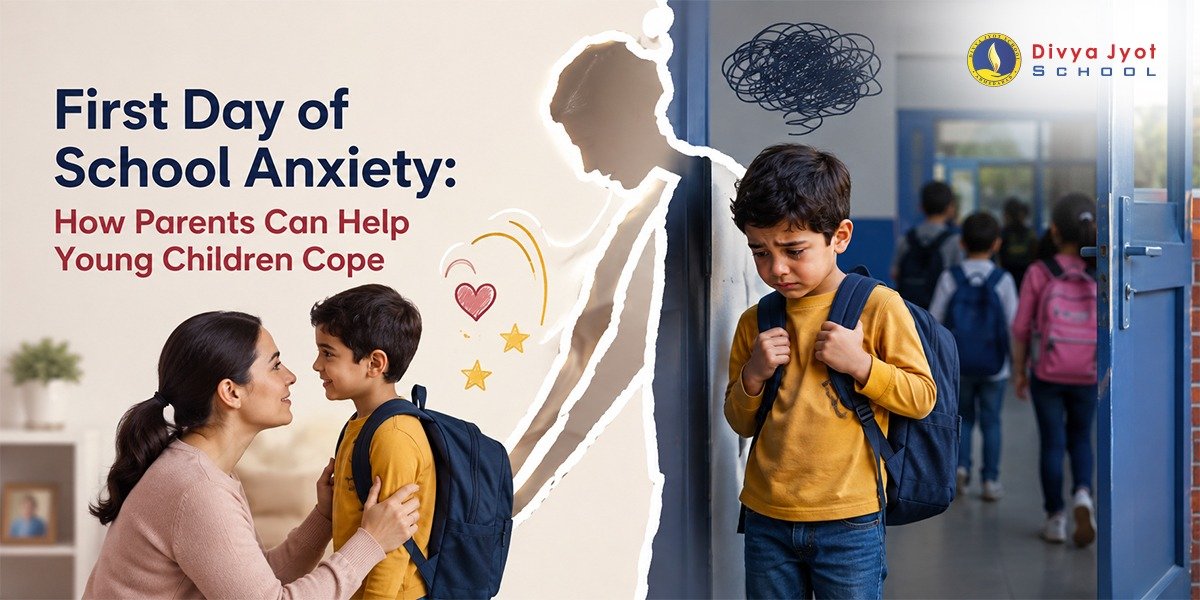
A child crying on the first day of school at the gate is one of the hardest things for a parent to walk away from. But child psychologists are consistent on this point. A clean, confident goodbye is always kinder than a prolonged one.
Most children recover and engage with their classroom quickly once the parent has left. Teachers see this every single year. The crying at the gate and the happy child painting twenty minutes later are both real. Trust the teacher to bridge that gap and trust your child’s resilience more than their tears.
If your child is crying on the first day of school, do not go back in after saying goodbye. It restarts the separation process and makes the next day harder. Leave warmly, leave confidently, and follow up with the teacher later in the day if you need reassurance.
Supporting Child Emotional Development at School During the Transition
Child emotional development at school during the settling-in period needs consistent support at home for the days and weeks that follow the first day.
Use questions such as How was school? Instead of just How was school? This is nearly always followed by a fine. See if you can remember what you laughed at today or who was your seat partner at lunch. Specific questions elicit specific answers and open the door for meaningful discussion.
Acknowledge emotions but don’t feed them. If your child tells you that school is scaring him or her, give him or her some recognition for his or her feelings, but don’t make their voice louder than your own. It’s obvious that if it feels new and different, it is healthier than if I were to say, “I know, it is really hard.” The first validates. The second reiterates the fear.
Recognize small accomplishments in a specific manner. Not only were you so brave, but you also walked into class by yourself; that took some courage. Specific feedback for specific behavior accumulates.
Do not cause any disturbances in the afternoon during the first few weeks. Young children are really tired when they start school. It is not a light burden to be in a new, unfamiliar place every day, emotionally or cognitively. Protecting after-school time and keeping it low-key supports child emotional development at school by giving children space to process and reset before the next day.
How Divyajyot School Helps Children Settle In
A school that genuinely understands child school anxiety tips in practice, not just in theory, makes an enormous difference to how quickly children feel at home.
Our early years teachers at Divyajyot School are skilled at helping children to make this transition. The first days are intentionally easy, fun, and non-threatening. Time is provided for children to explore and relate before structured learning. Parent communications are maintained and made effective during the settling-in phase. We will be contacting you directly if your child had a wonderful morning or has required some extra help.
Across our campuses in Shilaj and Tragad, we’ve created warm, welcoming environments the first time you step onto our doorsteps. Consistent routines, familiar faces, and teachers who take time to know each child by name, personality, and pace. That combination makes the first day of school a scary one, but also a fun and exciting start.
Conclusion
The first day is no reason to worry. It’s a journey to undertake with patience, proper preparation, and a school that knows how to approach an anxious child with warmth. Being afraid is not a fault of your child. They are human. But with the proper support, that fear is usually quickly replaced with curiosity, connection, and confidence.
We have seen hundreds of little faces come through our gates at Divyajyot School. We know how to support children to feel settled, grow, and enjoy school.
Admissions for 2026 to 2027 are open across the Shilaj and Tragad campuses. Come visit us and see the kind of welcome your child deserves on their very first day.