

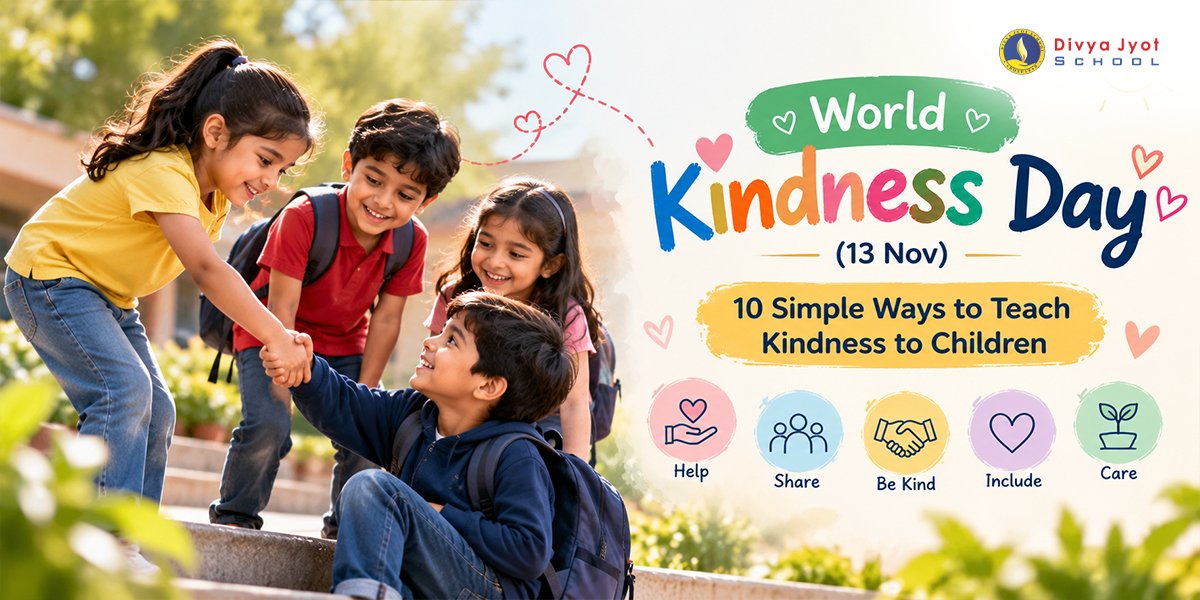
13 November is the day the world takes a pause to honor small acts of care that make a big difference every year. World Kindness Day 2026 is a great reminder that kindness isn’t just a trait one is born with; it’s a skill that can be taught, demonstrated and practiced. It’s little actions that can make a big difference in how to teach kids kindness and those little actions are best repeated over and over. If you are a parent wanting to teach your children about kindness at home or a teacher searching for kindness activities for school students, here are 10 ideas that you can try out right now. Whether it’s through storytelling ideas, role play, kindness games for kids, or printable kindness worksheets for kids, these are all ways for children to learn, practice and have fun with being kind. We at Divya Jyot School feel that character building is a right part of the academic work of students and that kindness is the basis of both.
Why Kindness Matters for Children
Children’s relationships with their friends, their mediation of conflict and their perception of themselves are formed by kindness. Warm, caring children are more assured, more connected and more emotionally secure. Make this World Kindness Day 2026 more than just a day; it’s a habit! Schools can incorporate kindness activities in the classroom and into their daily schedules and families can foster this same attitude in their daily discussions. If home and school convey the same message, children are kind anywhere.
1. Lead by Example: The First Step in How to Teach Kids Kindness
Children mimic behaviours that they observe. Apologize to the bus driver, talk to an angry shopkeeper and say sorry when you make a mistake. Respect rubs off; you don’t need a lecture. If you’re looking for how to teach children kindness, start by showing it to them. Make decisions and verbalize them, e.g., ‘I’m going to help my neighbor; she needs some help. ‘ The everyday moments here are made into learning moments for children in these small commentaries.
2. Build Empathy by Talking About Feelings
Kindness is based on empathy. Make inquiries such as, “How did she feel when she was left out?” or “What would make him feel better? Aide children to identify feelings, e.g., sadness, excitement or worry. Once they can identify feelings in themselves, they’re better able to identify feelings in others. Practise perspective taking in everyday contexts, such as when two children are fighting at the playground or a character in a cartoon.
3. Weave Kindness Lessons for Kids at Home into Daily Routines
Habits start at home! Establish family traditions like sharing one kind thing that happened at dinner, writing a thank you note each week or helping kids with homework. It is consistency-there are no special materials needed for these lessons. Give small caring tasks such as watering a neighbor’s plant or packing an additional snack for another friend to make caring a part of family life.
4. Read Stories That Celebrate Kindness
Stories provide opportunities for children to try on different shoes. Select books featuring pictures and short stories that teach children to share, forgive, include others or stand up for friends. Following reading, ask, “What do you think the character chose to do?” or “What would you do?” Invite children to tell the story again, giving their own conclusion. These are conversations that create a “vocabulary of kindness” that can be used in the real world over time.
5. Plan Kindness Activities in the Classroom Every Week
You can dedicate 10 minutes of each class to a weekly act of kindness circle where kids can give each other compliments. Another popular way is to have students drop notes into a “kindness jar” that share examples of acts of kindness they have witnessed. The kindness activities in classroom spaces are best if made regular, inclusive and student-led. Take turns with each child being the helper, the encourager and the listener.
6. Use Kindness Worksheets for Kids to Encourage Reflection
Children have a quiet space to think about what they are doing with printable worksheets. Use phrases like “Draw a picture of a time when someone helped you” and “Make a list of three ways to help a lonely classmate.” Younger children can color and draw and older children can write their own reflections or set their own goal for a week of kindness! These sheets also provide parents and teachers with insights into a child’s thoughts on empathy and fairness.
7. Play Kindness Games for Kids That Build Teamwork
Lessons are happy when they are played in games. Play a game of “Compliment Catch,” where the child throws out a soft ball and says something nice to the player who catches it, or a “kindness bingo card” with words and actions such as “hold the door,” “share your snack,” etc. Cooperative games help children learn to take turns, listen to others, and celebrate their success, while not letting their energy level drop during the activity. The values remain with the children even after the game is over, since they have been a lot of fun.
8. Organize Kindness Activities for School Students Beyond the Classroom
Bring learning out of the classroom. Kindness activities for school students can be carried out, such as making greeting cards for senior citizens, collecting books for a small library, or organizing a clean-up drive in the neighborhood for school students. Older students will be able to work with younger students during reading time. Children learn that service projects make a real difference – not just in their feelings, but in people and the world around them and develop responsibility for others.
9. Praise Kind Behavior Specifically
Positive comments such as “good job” are very unhelpful. Rather, explain what you observed: “You shared your crayons with Aanya when you wanted them too; that’s being generous.” Children are learning to link their behavior to the good that it is doing. Don’t focus on getting rewards for kindness, as a child’s motivation to be kind is to do the right thing, not for a reward.
10. Celebrate World Kindness Day 2026 Together
Have 13 November a special day. Organize an assembly to celebrate kindness, have a “Wall of Kindness,” or have families tell stories about kind things they have done. Parents can organize a home challenge for a week, in which each member of the family does one kind act each day. Celebrating together helps remind children that kindness is also a value for the community and the memories made will help to get them on the path to continuing to do well throughout the year.
Conclusion
Teaching kindness is a gentle, ongoing journey, and every small moment counts. By modelling respect, talking about feelings, using stories, worksheets and games, and involving the wider community, you give children the tools to become caring, confident individuals. As World Kindness Day 2026 approaches, choose two or three ideas from this list and begin right away. Once you understand how to teach kids kindness through everyday actions, the lessons become part of who your child is. To learn more about our values-driven approach to education, visit Divya Jyot.